7 Steps to Booking Local Talent for Utica Festivals
Quick Summary
Booking local talent for Utica festivals starts with a written budget that covers performer fees, travel, equipment, and extras. Then shortlist performers with proven event experience, ask detailed questions, lock the schedule, and put every term in a signed contract.
- Build a total budget first, then split it into fee, travel, equipment, extras, and contingency.
- Request a written fee breakdown from each provider so you compare totals, not just base fees.
- Match performers to your audience by checking recent footage from events like yours.
- Put date, fees, deposits, and cancellation terms in a signed contract before the event.
- Confirm power, sound, accessibility, and weather plans well ahead of event day.
Table of Contents
- Why Booking Local Talent for Utica Festivals Takes More Planning Than You Think
- Step 1: Set Your Budget and Fee Breakdown Before You Search
- Step 2: Discover Performers in Utica and the Mohawk Valley
- Step 3: Ask the Right Questions Before You Book a DJ
- Step 4: Decide on Set Length and Scheduling for Each Act
- Step 5: Put Terms in Writing With a Festival Entertainment Contract Template
- Step 6: Plan Stage, Sound, Accessibility, and Weather Logistics
- Your Next Step: Working Through a Festival DJ Booking Checklist
- Frequently Asked Questions
Why Booking Local Talent for Utica Festivals Takes More Planning Than You Think
Last Updated: October 30, 2026
Booking local talent for Utica festivals sounds simple until you start making calls. Many organizers assume a good DJ or band will be easy to find and easy to afford.
The steps below will help you plan and book entertainment with confidence.
Most planning mistakes happen before the first phone call. Organizers pick a date, pick a genre, and start searching without a budget. That order creates problems later.
Here is what this guide covers:
- Setting a realistic budget
- Finding performers near Utica and the Mohawk Valley
- Asking the right questions before you book
Step 1: Set Your Budget and Fee Breakdown Before You Search
Start with a total entertainment budget, then split it into parts. Performer fees are only one line item. Plan for sound equipment, travel, lighting, and any add-ons you want, such as a photo booth or karaoke.
A simple budget worksheet helps:
- Performer fee: the base price for your chosen set length
- Travel or mileage: especially if the act is coming from outside the area
- Equipment and sound: check whether it is included or billed separately
How festival talent fees are usually structured
Most festival bookings combine a few pricing components rather than a single flat rate. Understanding the structure lets you compare offers on equal terms instead of chasing the lowest headline number.
- Base performance fee. Priced per set or per event block. A 60-minute DJ set and a 90-minute live band set are not priced the same way, and a full-day festival may require multiple blocks with breaks.
- Deposit and balance. A common pattern is a deposit to hold the date, with the balance due before or on event day. Ask when the deposit becomes non-refundable and whether it transfers if you reschedule.
- Travel and mileage. Local acts may charge little or nothing; regional acts often add a travel line. Confirm whether travel is billed one way or round trip and whether it applies to load-in and load-out days.
What moves the price up or down
A few factors consistently change what a performer quotes:
- Set length and number of sets. More blocks mean more setup, tear-down, and standby time, which performers price in.
- Audience size and venue type. A large outdoor stage with a big crowd usually requires more gear and crew than a small community event.
- Distance from the performer's home base. Local acts avoid travel costs; regional acts build them into the quote.
A practical way to compare quotes
Ask every provider for a written fee breakdown using the same categories: base fee, deposit, travel, equipment, overtime, and add-ons. Then compare totals, not just the base fee. A quote that looks low on the base line can end up higher once travel and equipment are added, and a quote that includes production may be the better value for an outdoor festival.
Pricing depends on date, length of set, and what the event needs. Ask each provider for a written fee breakdown so you can compare offers on equal terms. For current pricing on our services, contact TheMovement315 for a quote.
The article breaks festival talent pricing into a few components, so it helps to compare them side by side.
Cost component | What it covers | What to confirm |
|---|---|---|
Base performance fee | Priced per set or per event block | Fee for your chosen set length |
Deposit and balance | Holds the date, then final payment | When the deposit becomes non-refundable |
Travel and mileage | Cost of getting the act to your event | Whether travel is one way or round trip |
Production and equipment | PA, microphones, lighting, power | Who supplies each piece of gear |
Overtime | Time beyond the booked set | Hourly or per-block overtime rate in writing |
Add-ons | MC services, lighting, recorded music between sets | Whether each is a separate line item |
Step 2: Discover Performers in Utica and the Mohawk Valley
Local talent can be easier to coordinate than out-of-town acts, and local performers often know the area's venues and crowds. Browse the best event entertainment options in Utica to see who is available locally. Start with the sources most likely to show real availability:
- Recommendations from local venues and event planners
- Performer listings and portfolios that show live event footage
- Community event calendars and festival organizers
Look for proof of experience at events like yours. A DJ who has worked weddings may not be the right fit for a corporate party or a high school dance. Match the performer's background to your audience. Mixed-age crowds, for example, need a performer who can move between genres.
Step 3: Ask the Right Questions Before You Book a DJ
Good questions reveal how a performer works, not just how they sound. Our DJ hiring guide covers what to look for in DJs. These are the questions we hear most often from hosts, and the ones worth asking any provider:
- Will you follow our playlist and avoid songs we have excluded?
- How do you handle requests from guests of different ages?
- Can you act as MC, or do we need a separate host?
- What equipment do you bring, and what do you need from the venue?
Pay close attention to how a provider answers. Clear, specific answers signal experience. Vague answers are a warning sign.
Step 4: Decide on Set Length and Scheduling for Each Act
Set length shapes both cost and energy. A longer set is not always better. Match the length to your program:
- Background music during dinner: a steady, lower-energy mix
- Dance floor sessions: plan blocks of 60 to 90 minutes for peak energy
- Full-evening coverage: most events need a clear break schedule
Lay out the run of show with start and end times for each act. Include setup time, breaks, and speeches. Sharing the schedule in advance helps the performer keep the event moving.
Step 5: Put Terms in Writing With a Festival Entertainment Contract Template
A written contract protects both you and the performer. See what a DJ contract should include. Verbal agreements often lead to confusion about start times, fees, and cancellations. A solid agreement should cover:
- Date, start time, end time, and set length
- Total fee, deposit amount, and payment schedule
- Cancellation and rescheduling terms, with clear deadlines
- Equipment, setup, and venue requirements
Ask for the contract early and read every line. Have someone else review it if the event is large.
What a festival-ready agreement should spell out
A generic performance contract is a starting point, but outdoor festivals need a few extra clauses. Use this as a checklist when you review or draft an agreement:
- Deposit and payment schedule. State the deposit amount, when it is due, and when the balance is due. Clarify whether the deposit is refundable and under what conditions.
- Cancellation tiers. A common pattern is a full refund if the performer cancels far enough in advance, a partial refund closer to the date, and no refund within a short window. The same tiers should apply if you cancel.
- Rescheduling terms. If weather or another issue forces a date change, state whether the deposit transfers and whether any new fee applies.
- Force majeure. Define what counts as an uncontrollable event, severe weather, public health orders, venue closure, and what happens to deposits and fees in that case.
Insurance, permits, and cancellation terms in plain terms
Insurance and permits are the details organizers most often skip, and they are the ones most likely to cause problems on event day.
- Liability insurance. Many venues and municipalities ask for proof of general liability coverage before an event. Ask performers early whether they carry it.
- Permits and sound rules. Outdoor events may fall under local noise ordinances or require a permit for amplified sound. Confirm who is responsible and build lead time into your schedule.
- Cancellation and weather. Outdoor festivals face weather risk that indoor events do not. A clear cancellation and rescheduling clause, plus a defined rain plan, protects both sides.
A simple review process
- Request the performer's standard agreement and any technical rider.
- Compare the terms against the checklist above and flag anything missing.
- Ask for written clarification on deposits, cancellation tiers, insurance, and permits.
- Have a second person review the agreement if the event is large or the fee is significant.
- Keep a signed copy and a record of any changes in writing.
A clear contract does not make the booking feel less friendly, it makes the event day smoother because everyone knows what to expect.
Step 6: Plan Stage, Sound, Accessibility, and Weather Logistics
Outdoor festivals add challenges that indoor events do not. Confirm these details well ahead of time:
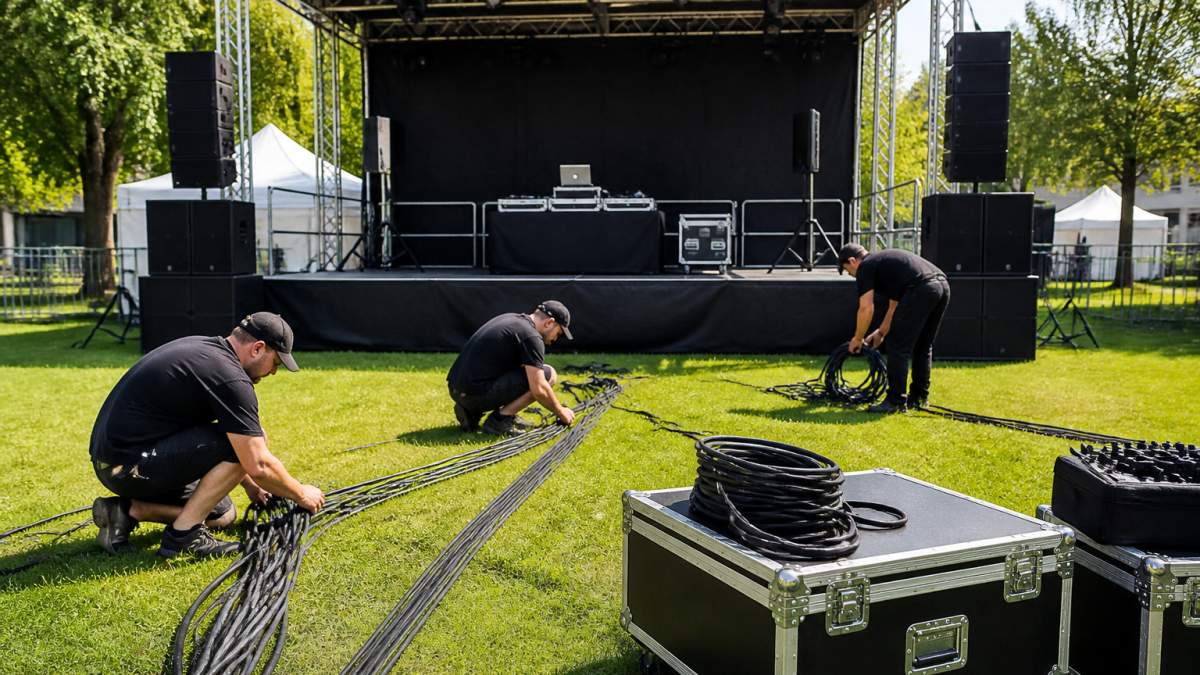
- Power: confirm outlets, amperage, and where cable runs will go
- Sound: test levels for the space and check the coverage area
- Accessibility: make sure the stage, route, and seating are reachable for all guests
- Weather: plan a rain location or cover for equipment and cables
A festival stage with a DJ setup on an outdoor lawn needs more than good speakers. It needs clear power routing, a shaded spot for gear, and someone who checks cable runs before guests arrive.
Your Next Step: Working Through a Festival DJ Booking Checklist
Use this checklist to track each booking from first call to event day:
- Total budget set, with fee breakdown requested from each provider
- Performers shortlisted and matched to your audience
- Questions answered in writing, including backup plans
- Set length and run of show finalized
Booking local talent for Utica festivals is easier when you follow a clear process. Start with your budget, ask direct questions, and put every agreement in writing. When you are ready for a quote, contact TheMovement315.
Frequently Asked Questions
How far in advance should you book entertainment for a festival?
Booking timelines depend on the act type and the festival's size. Well-known local performers and DJs with regular calendars often fill their summer weekends early, so starting your search several months out gives you more choice. Smaller acts and open-mic style performers can sometimes be booked on shorter notice. Confirm dates in writing, and reconfirm availability about a month before the event so the schedule holds.
What should you ask a DJ before booking them for a festival?
Ask about their experience with outdoor and large-crowd events, what equipment they bring, and whether they supply backup gear. Confirm the set length, how they handle requests and playlists, and whether they can work with a master of ceremonies. Ask about travel fees within the Utica area, their setup and teardown time, and what happens if weather or a power issue affects the stage.
What should a festival entertainment contract include?
A solid contract lists the performer's name, date, start and end times, set length, and stage location. It should state the total fee, deposit amount, payment schedule, and any travel or equipment charges in USD. Include cancellation terms, rain or weather provisions, liability insurance requirements, and any permit responsibilities. Both parties should sign and keep a copy before the event.
What equipment and technical details should you confirm with a festival DJ?
Confirm power requirements, stage space, and whether the performer needs a dedicated circuit or generator for an outdoor site. Ask about speaker count and sound coverage for your crowd size, microphones, and whether they provide their own sound board. Check sound limits, accessibility of the setup area, and a rain plan for equipment protection.