9 Creative Corporate Event Ideas for Small Teams
Table of Contents
- Why Small Teams Need Different Corporate Event Ideas
- 1. Scavenger Hunts and Treasure Hunts
- 2. Music-Based Team-Building Activities
- 3. Trivia and Game-Show Formats
- 4. Cooking Classes and Food-Based Challenges
- 5. Murder Mystery and Role-Playing Events
- 6. Outdoor Adventures and Friendly Competitions
- 7. Craft Workshops and Creative Challenges
- Building Your Team-Building Event Agenda
- Matching Activities to Your Team Goal
- Frequently Asked Questions
Last Updated: October 21, 2026
Why Small Teams Need Different Corporate Event Ideas
Most corporate event advice is written for companies with hundreds of employees. That's a problem.
Small teams need events that fit their actual size. The best creative corporate event ideas for small teams work with five to fifteen people, cost less per head, and get everyone involved instead of letting a few loud voices dominate.
Here's what most guides get wrong: they treat small teams as a smaller version of big ones. In practice, the opposite is true. A small group can do things a large one can't. Everyone can rotate through a single activity. Nobody sits out.
At TheMovement315, we run music, karaoke, and photo booth entertainment at corporate functions. Below, we break down nine ideas, each with group size, rough cost tier, timing, and the team goal it serves best.
1. Scavenger Hunts and Treasure Hunts
Scavenger hunts are the most flexible small-team activity on this list. They scale from five to fifteen people without losing energy, and you can run one indoors, outdoors, or across a whole office floor. The format also fits the small-team advantage: with five to fifteen people you can split into pairs or trios, which means every person has a real job rather than standing in a crowd of thirty.
Split the group into pairs or trios. Give each team a list of clues, photo challenges, or riddles. Set a time limit of 45 to 90 minutes. The first team back with the most items wins.
- Best for: team bonding and friendly competition
- Group size: 5-15, split into teams of 2-3
- Cost tier: low; printable clue lists cost almost nothing, and a DIY hunt can run under $5 per person in materials
- Time to organize: 1-2 hours of prep
How to size the hunt for a small team
A common pattern is to build the hunt around the number of pairs, not the number of people. With eight people you get four pairs and four clue trails; with twelve you get six. Keep each trail to 8-12 stops so the hunt finishes inside the time limit. If you have an odd number, make one trio and give that team a slightly shorter trail so the race stays fair.
A simple run-of-show
Time | Activity | Notes |
|---|---|---|
0:00 | Gather and split into teams | Hand out clue sheets and rules |
0:10 | Hunt begins | Teams move on separate trails |
0:55 | Hunt ends, teams return | Collect finds and photos |
1:05 | Scoring and debrief | Each team shares its funniest find |
1:20 | Wrap-up | Quick two-question feedback form |
Make it inclusive
A hunt is easy to adapt for different participation styles and needs. Offer a photo-only trail for people with limited mobility so nobody has to climb stairs or walk long distances. Pair a quieter participant with a more outgoing teammate rather than forcing solo performance. Keep clues readable in large type, and avoid sensory-heavy locations like crowded arcades if anyone on the team is sensitive to noise. For dietary needs, skip food-based clues or make the edible prize optional.
Cost tiers at a glance
- DIY printable hunt: under $5 per person in materials; the main cost is your prep time.
- App-based or kit hunt: roughly $10-$25 per person depending on the kit.
- Hosted or facilitated hunt: mid to high per-person cost; worth it when you want the organizer to handle clues, scoring, and timing.
What most guides miss is the debrief. Gather everyone afterward and let each team share their funniest find. That five-minute wrap-up is where the bonding actually happens, and it doubles as your outcome measure: ask what people enjoyed most and whether they'd do it again.
Event planning guidance from the Project Management Institute
2. Music-Based Team-Building Activities
Music-based team-building activities use sound, rhythm, or song to get people interacting without the pressure of a formal icebreaker. They work because almost everyone has an opinion about music, and opinions start conversations.
Karaoke is the simplest version. A small group, a good song list, and a room that doesn't take itself too seriously. Group sing-alongs, "guess the song intro" rounds, and playlist-building challenges all work with the same setup.

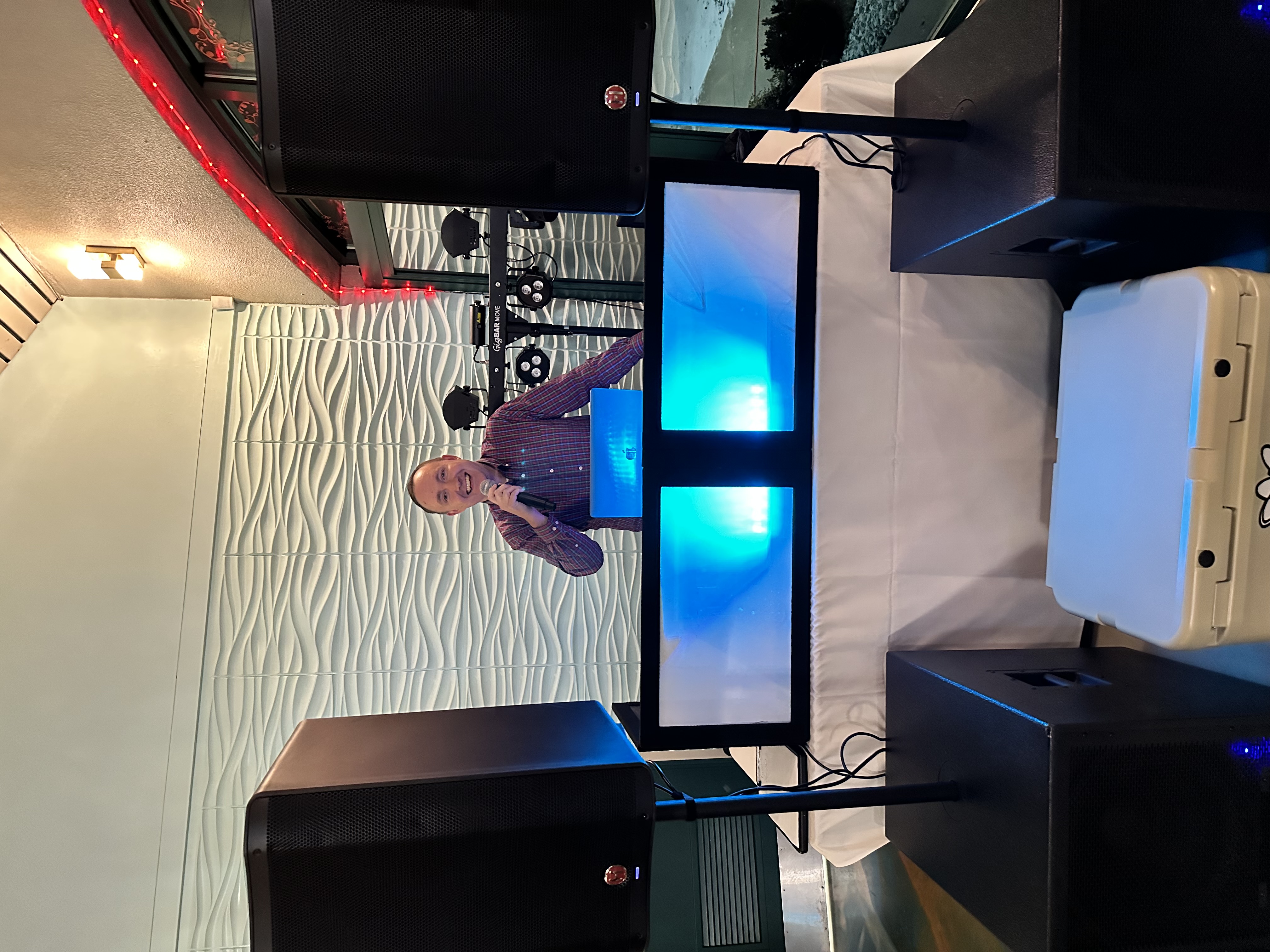
If you want the event to feel polished rather than chaotic, bring in a host who can read the room and keep the energy up. That's the part most teams underestimate.
- Best for: morale and connection across age groups
- Group size: 5-15 works well; everyone gets a turn
- Cost tier: low to mid, depending on whether you hire a host or DJ
- Time to organize: under an hour if you use a service
Mixed-age teams worry about this one. Done right, it's the great equalizer. Grandparents and college kids end up singing the same chorus.
3. Trivia and Game-Show Formats
Trivia nights and game-show formats turn a small team into competing squads. They're cheap, easy to run, and give quieter people a clear role.
Write five rounds of questions, mix in a picture round and a music round, and keep score on a whiteboard. For a game-show feel, add buzzers and a host with a microphone.
Format | Group Size | Setup Time | Best For |
|---|---|---|---|
Pub-style trivia | 6-15 | 1 hour | General bonding |
Music trivia | 6-15 | 30 minutes | Mixed-age teams |
Game-show style | 5-12 | 2 hours | High energy, competition |
Jeopardy-style board | 6-15 | 90 minutes | Problem-solving |
The mistake people make is writing questions that are too hard. Aim for a mix where everyone gets at least a few right. Nobody bonds over feeling stupid.
4. Cooking Classes and Food-Based Challenges
Cooking classes and food-based challenges give a small team a shared goal with a tasty payoff. A private class for eight to twelve people is a natural fit, and many instructors run them in a restaurant kitchen or a rented space.
Options range from a guided cooking class to a competitive "mystery basket" challenge where each team cooks a dish from set ingredients. A mocktail or cocktail class works the same way and tends to run shorter.
- Best for: collaboration and shared goal
- Group size: 6-12
- Cost tier: mid; per-person fees vary by menu and venue
- Time to organize: 2-3 weeks of lead time for a private booking
Check dietary needs before you book. A team event where two people can't eat the food undercuts the whole point.
5. Murder Mystery and Role-Playing Events
Murder mystery events assign each person a character, a secret, and a motive. The group works together to solve a crime over dinner or drinks. For a small team, this is one of the few activities where everyone has a real role.
You can buy a boxed kit sized for six to twelve players or hire a facilitator who runs the whole thing. Role-playing formats like improv games or themed escape-room-style puzzles work on the same principle.
- Best for: communication and problem-solving
- Group size: 6-12 for a boxed kit
- Cost tier: low for a kit, mid to high for a hosted event
- Time to organize: 1 week for a kit, 3-4 weeks for a host
The thing nobody tells you: not everyone loves acting. Give shy participants a non-performing role, like note-taker or clue-keeper, so they still contribute.
6. Outdoor Adventures and Friendly Competitions
Outdoor activities reset a team's energy in a way indoor events struggle to match. Hiking, a low-ropes obstacle course, lawn games, or a friendly field-day competition all work for small groups and get people moving.
Keep it simple. A two-hour hike followed by lunch covers bonding and wellness in one block. A lawn-game tournament with cornhole, bocce, and a relay gets competitive without needing a facility.
- Best for: wellness and morale
- Group size: 5-15
- Cost tier: low for a hike or park day, mid for a ropes course
- Time to organize: 1-2 weeks
Plan for different fitness levels. Offer a shorter route and a longer one, and make clear that either choice is fine. Accessibility matters here more than anywhere else on this list.
7. Craft Workshops and Creative Challenges
Craft workshops give a small team something to do with their hands and something to take home. Pottery, candle-making, terrarium building, and paint-and-sip sessions all run well for groups of six to fifteen.
The appeal is the low pressure. People chat while they work, and the shared mess makes conversation easier. A friendly "best in show" vote at the end adds a light competitive edge.
- Best for: connection and stress relief
- Group size: 6-15
- Cost tier: mid; materials drive the price
- Time to organize: 1-2 weeks
Building Your Team-Building Event Agenda
A team-building event agenda is the minute-by-minute plan for how the event runs, from arrival to wrap-up. Small teams still need one. Without it, the first twenty minutes disappear into awkward standing around.
Here's a simple run-of-show you can adapt:
Time | Activity | Notes |
|---|---|---|
0:00 | Arrival and snacks | Let people settle in |
0:15 | Welcome and rules | Keep it under 5 minutes |
0:20 | Main activity | The core event |
1:20 | Break | Drinks, restrooms |
1:35 | Second round or debrief | Share highlights |
2:00 | Wrap-up and feedback | Quick survey |
Pair this with a short corporate event planning checklist: confirm headcount, book the venue or host, send invites two weeks out, collect dietary needs, assign a photographer, and prepare a feedback form.
Matching Activities to Your Team Goal
The activity should follow the goal, not the other way around. Here's how we'd map it:
- Bonding: scavenger hunt, cooking class, craft workshop
- Communication: murder mystery, trivia
- Problem-solving: escape-room style puzzles, game-show formats
- Morale and wellness: music activities, outdoor adventures
- Celebration: karaoke with a photo booth, game-show night
Measure the outcome with a two-question survey sent the next day. Ask what people enjoyed most and whether they'd want to do it again. That feedback tells you more than any attendance count.
Planning a small-team event means juggling the activity, the agenda, and the entertainment all at once. That's where we come in. TheMovement315 brings over 20 years of experience running music, karaoke, and photo booth entertainment at corporate functions, and we handle the MC duties so you don't have to manage the room yourself. Our pressure-free phone consultation lets us tailor the setup to your group, and our photo booth gives your team personalized keepsakes from the night. Get a quote from TheMovement315 and let us carry the entertainment while you enjoy the event.
Frequently Asked Questions
What are some fun corporate event ideas for small teams?
Scavenger hunts, trivia nights, music-based team-building activities, cooking challenges, and murder mystery events all work well for groups of 5 to 15 people. Choose based on your goal: a scavenger hunt builds problem-solving, a music activity lifts morale, and a cooking class encourages collaboration. Keep the event to 90 minutes to two hours and assign roles so everyone participates.
How long should a corporate team-building event last?
For small teams, 90 minutes to two hours is the sweet spot. That is long enough to complete a meaningful activity and debrief without draining energy or disrupting the workday. If you include food or travel, plan for a half-day. A simple team-building event agenda might run 15 minutes for welcome and rules, 60 minutes for the activity, and 15 minutes for reflection and feedback.
How can music be incorporated into a team-building event?
Music-based team-building activities include office karaoke, name-that-tune trivia, playlist battles where teams defend song choices, and collaborative songwriting. A DJ or host can run the games and keep energy up. These formats suit small groups because everyone gets a turn, and they work for mixed ages when you rotate genres. They also double as entertainment for company parties and networking mixers.
How do you plan a corporate event for a small group on a budget?
Start with a per-person budget tier. Low-cost ideas include in-office trivia, a photo booth corner, or a potluck cooking challenge. Mid-tier options include a scavenger hunt with small prizes or a cocktail class. Higher tiers include a private murder mystery or an outdoor adventure. Use a corporate event planning checklist to track venue, supplies, roles, and feedback so nothing is forgotten.