How Do You Choose a School Dance Venue?
Last Updated: October 26, 2026
Quick Summary
When you choose school dance venue, match the space size to your expected attendance, verify it has multiple exits and adequate lighting for safety, and confirm it has good acoustics or allows you to bring your own sound system. The right venue provides the foundation for a memorable event that students will actually enjoy.
- Minimum ceiling height should be 8 feet; 10 feet or higher is ideal for school dances
- Verify the venue has multiple clearly marked exits, emergency lighting, and fire suppression systems
- Start researching venues 8-12 weeks before your event to have better options and pricing
- Ask whether the venue's sound system is included or if you need to bring your own equipment
- Confirm adequate lit parking and accessible entrances so all students can arrive safely
Table of Contents
- Why Venue Selection Makes or Breaks Your School Dance
- Key Factors to Evaluate When You Choose a School Dance Venue
- Questions to Ask a Venue for a School Dance
- How to Organize a School Dance Timeline
- School Dance Budget Template and Cost Breakdown
- Negotiating Venue Rental Rates and Add-On Services
- Book Your Venue and Plan Your Entertainment
- Frequently Asked Questions
Why Venue Selection Makes or Breaks Your School Dance
When you choose school dance venue options, selecting the right one is the single most important decision you'll make when planning a school dance. Everything else, the music, the lighting, the energy, depends on having a space that works.
At TheMovement315, we've worked with schools across Central New York to help them understand what separates a successful dance from a forgettable one. The venue choice affects your budget, your ability to control the atmosphere, and whether students will actually show up.
The stakes are real. A poorly chosen venue means disappointed students, wasted budget, and an event that doesn't deliver the experience you promised. A well-chosen venue gives you the foundation to create something genuinely memorable.
Key Factors to Evaluate When You Choose a School Dance Venue
When you're evaluating spaces, focus on the factors that actually matter. Not every venue is suitable for a school dance, and some spaces that look good on paper create problems once the event starts.
Capacity and Layout
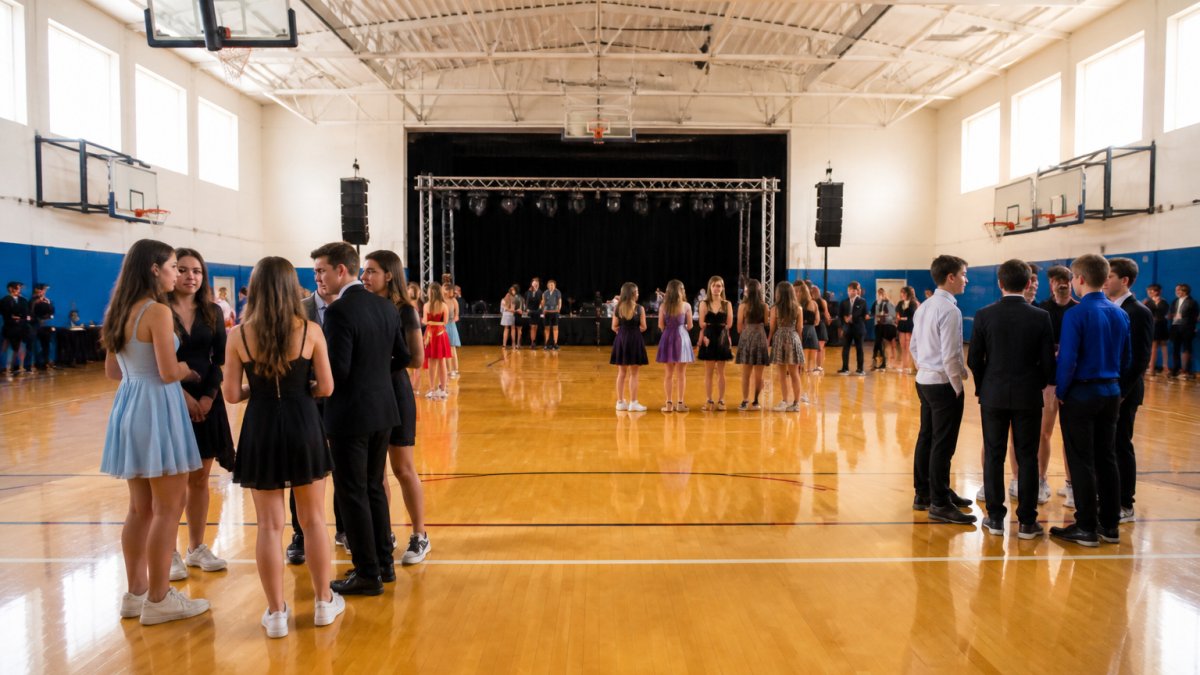
Start by matching the venue size to your expected attendance. A space that's too small feels cramped and creates safety issues. A space that's too large feels empty and wastes your budget on heating or cooling unused areas.
The layout matters as much as the raw square footage. You need:
- Open floor space for dancing (the main event)
- Separate areas for food and beverages if you're serving them
- Space for a DJ or band setup without blocking sightlines
- Clear pathways so students can move around safely
Check the ceiling height. Low ceilings make spaces feel cramped and can create issues with lighting rigs or decorations. Eight feet is the minimum; ten feet or higher is ideal for a school dance.
Safety and Security Features
Safety isn't optional, it's essential. When you choose a school dance venue, verify that it meets basic safety standards.
Look for these features:
- Multiple exits clearly marked and accessible
- Emergency lighting that works if the main power fails
- Fire suppression systems (sprinklers or extinguishers)
- Adequate lighting so students can navigate safely
- Climate control so the space doesn't become dangerously hot or cold
Ask about the venue's capacity limits. These are set by local fire codes and exist for a reason. Overcrowding creates real safety risks. The venue should have staff or security present during your event, or allow you to bring your own.
Acoustics and Sound System Infrastructure
Bad acoustics ruin a dance. If the sound bounces around and creates echoes, or if the system distorts at higher volumes, students won't enjoy the music no matter how good your DJ is.
When you visit a venue, ask these questions:
- Does the space have a built-in sound system, or will you need to bring your own?
- If there's a built-in system, what are its capabilities? (power output, speaker placement, microphone inputs)
- Are there acoustic treatments on the walls, or is it a bare concrete/tile space that echoes?
- Can you test the system before your event?
Professional lighting and audio systems matter. We recommend understanding why professional equipment makes a difference, visit why professional lighting matters for school dances to see how proper sound infrastructure transforms the student experience.
Parking and Accessibility
Students need to be able to get to the venue safely. Check whether there's adequate parking nearby, and whether the lot is lit and monitored. If parking is limited, consider whether students can arrive by bus or if parents will need to drop them off.
Accessibility matters too. Not every student can navigate stairs easily. The venue should have:
- Accessible entrances (ramps if needed, no steep steps)
- Accessible restrooms
- Accessible parking spaces near the entrance
- Space for students with mobility devices to move around the dance floor
Focus on these essential factors when evaluating potential dance venues.
| Factor | Key Consideration | Why It Matters |
|---|---|---|
| Capacity and Layout | Match venue size to expected attendance | Too small feels cramped; too large wastes budget |
| Ceiling Height | Minimum 8 feet; 10 feet or higher ideal | Low ceilings feel cramped and block decorations |
| Safety Features | Multiple exits, emergency lighting, fire suppression | Overcrowding creates real safety risks |
| Acoustics | Built-in sound system or bring your own | Bad acoustics ruin the music experience |
| Parking and Access | Adequate lit parking and accessible entrances | Students need safe arrival and mobility options |
Questions to Ask a Venue for a School Dance
Before you commit to a venue, ask these specific questions. The answers will help you understand whether it's the right fit.
Booking and Availability:
- What dates and times are available?
- What's the rental cost, and what does it include?
- Are there additional fees (setup time, cleanup, security, parking)?
- What's the cancellation policy if you need to reschedule?
Capacity and Rules:
- What's the maximum occupancy for the space?
- Are there rules about decorations or setup?
- Can you bring in outside food and beverages, or must you use the venue's catering?
- Are there restrictions on music or content?
Technical Setup:
- What sound and lighting equipment is included?
- Can you bring in your own equipment if needed?
- Are there tech support staff available during the event?
- What about microphone setup for announcements or speeches?
Support and Staffing:
- Will venue staff be present during the event?
- What's included in terms of setup and cleanup?
- Who's responsible for security and monitoring?
- What happens if something goes wrong during the event?
How to Organize a School Dance Timeline
Planning a school dance takes time. Starting early reduces stress and gives you better options when you choose school dance venue selections.
Create a timeline that works backwards from your event date:
8-12 weeks before:
- Form your planning committee
- Set a budget and identify funding sources
- Start researching venues in your area
- Begin preliminary venue visits
6-8 weeks before:
- Narrow down your top 3-5 venue choices
- Ask detailed questions and get pricing
- Make your final venue selection
- Secure your booking with a deposit
4-6 weeks before:
- Plan your entertainment (DJ, band, or playlist)
- Decide on decorations and setup details
- Start promoting the event to students
- Finalize your budget and payment schedule
2-4 weeks before:
- Confirm all vendor details (DJ, caterer, security)
- Finalize your decoration plans
- Recruit and train volunteers or chaperones
- Handle final promotion and ticket sales
1 week before:
- Confirm attendance numbers with your venue
- Do a final walkthrough of the space
- Verify all equipment will be in place
- Brief your team on their roles
Day of event:
- Arrive early for setup
- Test all equipment before students arrive
- Have a clear plan for entry, exit, and emergencies
- Enjoy the event
For detailed timeline guidance, review how to organize a school dance timeline to ensure you're covering every step.
School Dance Budget Template and Cost Breakdown
Your budget depends on the size of your event, the venue you choose, and what services you include. Here's how to think about the major cost categories:
Venue rental: This is typically your largest expense. The cost varies widely depending on location, size, and included amenities. Ask whether setup and cleanup time are included or cost extra.
Entertainment: A DJ, band, or high-quality sound system is essential. This is worth budgeting for properly, cheap entertainment is usually obvious to students.
Decorations: You can spend a lot here or a little. Focus on a few impactful elements rather than trying to decorate every surface.
Refreshments: If you're serving food or beverages, budget accordingly. Some venues include basic setup; others charge for everything.
Staff and volunteers: Chaperones, security, and setup crew may need compensation or thank-you gifts.
Contingency: Always add 10-15% to your total budget for unexpected costs.
Start by identifying your total available budget, then allocate percentages to each category. Adjust based on your priorities, if entertainment is most important to you, allocate more there and less to decorations.
Negotiating Venue Rental Rates and Add-On Services
Venue pricing isn't always fixed. Many spaces have flexibility, especially if you book during off-peak times or if you're a school or nonprofit organization.
When you negotiate, focus on these areas:
Rental rate: Ask if there are discounts for schools, nonprofits, or off-peak bookings (weekday afternoons instead of Saturday nights). Some venues offer lower rates for shorter events.
Included services: Clarify what's included in the base rental. Does it include tables, chairs, basic lighting, or sound?
Payment terms: Ask about payment schedules. Some venues want full payment upfront; others allow deposits with final payment closer to the event.
Flexibility: If you're booking during a slower season, you may have more negotiating power. Ask what flexibility the venue offers if your attendance numbers change.
Be respectful and professional in your negotiations. Venue managers appreciate working with organized, communicative clients. A reasonable request often gets a positive response.
Book Your Venue and Plan Your Entertainment
Once you've chosen your venue, the next step is securing your entertainment. The right DJ or sound system transforms the space and keeps students engaged throughout the night.
When you're ready to book entertainment, consider working with a provider who understands school events.
For guidance on hiring entertainment for your school dance, explore hiring a DJ for a school dance: a 2026 guide to understand what to look for and how to evaluate your options.
You should also start promoting your dance to students. Review how to promote a school dance to students for strategies that actually drive attendance.
If you need help managing all the moving pieces, chaperones, timeline, logistics, consider how to manage chaperone logistics for school dances to ensure nothing falls through the cracks.
Finally, as you finalize your venue choice and entertainment booking, remember that the details matter.
Frequently Asked Questions
What are the most important factors when choosing a school dance venue?
Capacity to fit your expected attendance, safety and security features, sound system capability, and parking availability are the top priorities. The venue layout should allow for dancing, socializing, and emergency exits. Check whether the space has adequate lighting, climate control, and restroom facilities. Confirm that the venue's policies align with your school's requirements and that staff will be present during your event.
How far in advance should you book a venue for a school dance?
Book your venue 3 to 6 months ahead for school dances, especially if you're planning during peak seasons (fall and spring). Popular venues fill quickly, and securing early gives you negotiating power on pricing and allows time to coordinate with entertainment providers like DJs or photo booth services. Last-minute bookings often result in limited options and higher costs.
What should a school dance budget template include?
Your budget should cover venue rental, entertainment (DJ or karaoke services), decorations, lighting, sound equipment if not included, refreshments, staff or chaperone costs, insurance if required, and contingency funds (typically 10-15% of total). Break costs into fixed expenses (venue, entertainment) and variable ones (refreshments, decorations). Include add-ons like photo booths separately so you can adjust based on available funds.
How do I know a venue will accommodate my specific entertainment needs?
Ask the venue about electrical outlets, stage space, sound system compatibility, and setup time before your event starts. Request references from other organizations that hosted events with entertainment providers. Confirm that your DJ or entertainment company has worked at that venue before, or arrange a site visit so they can assess acoustics, power availability, and any technical limitations that might affect performance quality.
The difference between a forgettable dance and one students talk about for years comes down to planning. When you choose a school dance venue thoughtfully, book entertainment that matches your vision, and execute with attention to detail, everything clicks into place. Start your planning early, ask the right questions, and don't settle for less than what your students deserve.