How to Coordinate Wedding Music With Catering
Table of Contents
- Why Coordinating Music and Catering Matters
- Building Your Wedding Reception Timeline
- Selecting Wedding Dinner Music That Fits Your Vibe
- Timing Wedding Speeches and Dinner Service Together
- DJ and Caterer Coordination Checklist
- Reception Entrances, First Dance, and Specialty Moments
- Common Mistakes to Avoid When Coordinating Music and Catering
- Frequently Asked Questions
Last Updated: October 12, 2026
Why Coordinating Music and Catering Matters
Your wedding reception has two moving parts that must work together: the food and the music. When they're coordinated, guests enjoy a seamless experience.
Here's what most couples miss: your DJ and caterer need to talk to each other before the wedding day arrives. The music sets the mood during each course. The catering timeline determines when that mood needs to shift.
The alternative is chaos, speeches interrupted by clattering dishes, first dances delayed because dinner ran long, or a dead dance floor because the music didn't match what guests needed in that moment.
This guide walks you through how to coordinate wedding music with catering so every moment flows naturally. We'll cover the timeline, the communication checklist, and the specific mistakes that derail even well-planned receptions.
Building Your Wedding Reception Timeline
Your wedding reception timeline is the backbone of coordination. It tells your DJ and caterer exactly when things happen and why the music matters at each stage.
Start by mapping out every major moment: guest arrival, cocktail hour, dinner service, speeches, first dance, and dancing. Each moment needs its own music strategy. Your caterer needs to know when they should be serving appetizers versus clearing plates.
The timeline works best when it's realistic. Don't schedule 90 minutes for cocktail hour if your venue only has space for 45 minutes. Don't plan a three-course plated dinner if your caterer typically needs 90 minutes for that service. Build the timeline around what your team can actually deliver.
Prelude and Guest Arrival
Before guests sit down, they're arriving and finding their seats. This is where music sets the tone for the entire reception.
Plan 30-45 minutes for prelude and guest arrival music. This is background music, not dance music. It should be instrumental or soft vocal. Think jazz, classical, acoustic covers, or ambient music. The volume should allow guests to talk and move around comfortably.
Your DJ should have this playlist ready before the first guest arrives. No scrambling. No last-minute decisions. Coordinate with your caterer to confirm when cocktail service starts, because the moment food appears, guests settle in and your prelude music becomes the backdrop for their conversation.
Cocktail Hour and Drinks Reception
Cocktail hour is when your caterer shines. They're moving appetizers, pouring drinks, and creating energy through hospitality.
Your music during cocktail hour should match that energy. It's still background music, but it can be slightly more upbeat than prelude music. Live acoustic music, jazz, or curated playlists work well. Keep the volume moderate so guests can hear each other talk.
Coordinate the timing with your caterer. If they're serving for 60 minutes, your DJ should know that. If appetizers run out early or late, the caterer will let your DJ know, and the DJ can adjust the energy accordingly. This is the first real test of your DJ and caterer working together.
Selecting Wedding Dinner Music That Fits Your Vibe
Dinner music is where most couples make their first mistake: they pick upbeat dance music. That's wrong. Dinner music should be calm, sophisticated, and easy to talk over.
Your dinner music sets the vibe for the entire meal. If you want an elegant, formal feeling, choose classical or jazz. If you want something warmer and more personal, choose acoustic covers or soft indie music. If you want a fun, casual vibe, choose feel-good pop or Motown classics at low volume.
The key is matching the music to your wedding's overall tone. A black-tie reception needs different dinner music than a backyard barbecue. Your DJ should understand your vibe and have playlists ready for each phase of dinner.
Volume and Tone During Meal Service
Here's the technical part that changes everything: volume during meal service.
During dinner, your music should be at conversation level. That means guests can hear each other from across the table without raising their voices. This is typically 60-70 decibels.
Tone matters too. Avoid anything too loud, energetic, or rhythmic during the actual meal. Save the upbeat songs for after dinner when people are done eating. During dinner, choose music that enhances the meal without competing for attention.
Coordinate with your caterer on this. If servers are moving plates, clattering dishes, and taking orders, they'll tell your DJ if the music is too quiet or too loud. Your DJ should be ready to adjust on the spot.
Transitioning Between Courses
Most receptions have multiple courses: salad, entrée, dessert. Each course is a moment to shift the music slightly.
Between courses, your DJ can increase the energy a little. Not dance music yet, but something more engaging. This keeps guests from getting bored during the service breaks. Your caterer will clear plates, reset the table, and bring the next course. Your DJ's job is to fill that gap with music that maintains momentum.
Coordinate the timing with your caterer. Ask them: How long does it take to clear salad plates and bring entrées? That's your window for a slightly more energetic song. Then dial it back when the main course arrives. This back-and-forth coordination makes the entire reception feel intentional instead of random.
Timing Wedding Speeches and Dinner Service Together
Speeches and toasts are where coordination gets tricky. Your caterer needs to pause service. Your DJ needs to cue music. Guests need to hear clearly.
Here's how to handle it: decide in advance when speeches will happen. Will they be during dinner or after? Most couples choose during dinner because it keeps the reception moving. Your caterer will pause service during speeches. Your DJ will lower music volume and cue the microphone.
Cueing Music Around Toasts and Announcements
Your DJ needs a clear signal for when speeches start and end. This is usually a hand signal or a quick text. When a speech starts, your DJ mutes the music or lowers it to almost nothing. When it ends, your DJ brings the music back up smoothly.
Coordinate this moment with your caterer too. They should know that speeches are happening and should pause their movement around the room. Nothing kills a heartfelt toast like a server reaching across the table with a plate.
Your DJ should have a playlist of short songs (2-3 minutes) ready to play between toasts. This fills the gap while the next person gets to the microphone and keeps the energy moving.
Managing Pauses and Transitions
Pauses are awkward. Silence during a reception feels longer than it actually is.
Your DJ should never leave dead air. Between speeches, between courses, between the meal ending and dancing starting, there should always be music. It doesn't have to be loud or attention-grabbing. It just has to be there.
Coordinate with your caterer on timing. If dessert service takes longer than expected, your DJ knows to keep playing background music instead of jumping straight to dance music. If speeches wrap up early, your DJ can transition to dancing sooner. This flexibility comes from clear communication before the wedding day.
DJ and Caterer Coordination Checklist
This is the practical part. Use this checklist to make sure your DJ and caterer are on the same page.
Pre-Wedding Communication
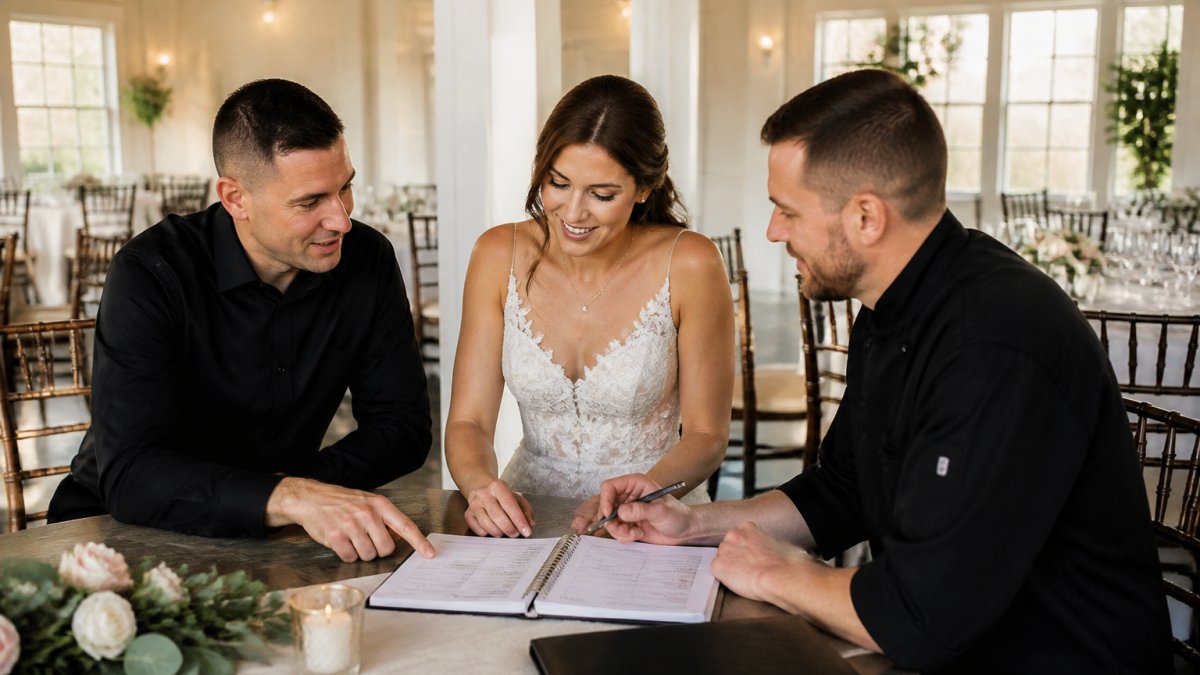
Before the wedding, your DJ and caterer should have a conversation. Here's what they need to discuss:
- Exact timing for each phase: prelude, cocktail hour, dinner, speeches, dancing
- Number of courses and estimated time for each course
- When speeches will happen and how long they typically last
- Music volume during dinner and how to adjust if needed
- Who will signal the DJ when to start and stop music for speeches
- Backup plans if dinner runs late or early
- Where the DJ will set up and where the caterer will work
- Whether the caterer needs quiet time during any part of the reception
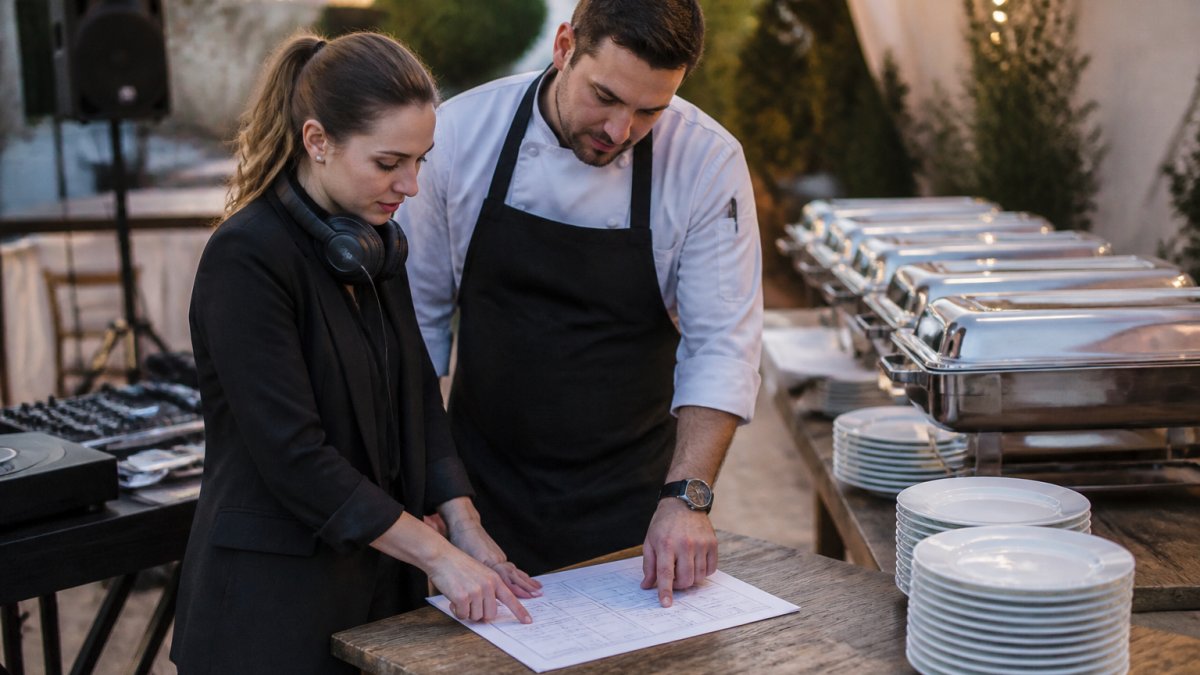
Your job is to facilitate this conversation. Give your DJ and caterer each other's contact information. Ask them to exchange a quick call or email two weeks before the wedding.
Day-of Coordination and Contingency Plans
On the wedding day, your DJ and caterer will encounter surprises. Guests arrive late. Dinner takes longer than planned. A speech runs over. Your DJ and caterer need to adapt together.
Here's what should happen: your DJ and caterer stay in contact throughout the reception. A quick text or hand signal is all it takes.
Your DJ should also have contingency playlists ready. If dinner music isn't working, they can switch to a different style. If the dance floor is dead, they can change the energy. Your caterer should have flexibility too.
Having answers to these questions before the wedding day means your DJ and caterer can handle anything smoothly.
Reception Entrances, First Dance, and Specialty Moments
After dinner ends, the mood shifts completely. Your DJ takes over and builds energy toward the first dance.
This is where how to coordinate wedding music with catering changes. The caterer is mostly done with service. They're clearing plates and preparing dessert. Your DJ is now the main focus.
Your first dance is sacred. Your DJ should play exactly the song you chose, at the volume you want, without any interruptions. Coordinate with your caterer: no clearing plates during the first dance. No one walking across the dance floor. Just you, your partner, and your song.
After the first dance, your DJ can cue the wedding party dances, parent dances, or specialty moments. Each one needs music. Each one needs the caterer to know not to interrupt.
Common Mistakes to Avoid When Coordinating Music and Catering
Most couples make at least one of these mistakes. Knowing them helps you avoid them.
Mistake 1: No pre-wedding conversation between DJ and caterer. Your DJ and caterer have never talked.
Mistake 4: Ignoring volume during service. Your DJ plays beautiful dinner music at dance-floor volume.
Mistake 5: No contingency plan. Dinner runs 30 minutes late. Your DJ doesn't know.
Mistake 6: The DJ and caterer don't know each other's names. They've never communicated.
Avoiding these mistakes comes down to one thing: treat your DJ and caterer as partners.
Your wedding day has dozens of moving pieces. Music and catering are two of the biggest.
TheMovement315 has been coordinating these details for over 20 years across Central New York.
Get in touch with TheMovement315 for a quote.
Frequently Asked Questions
How do you coordinate a wedding DJ with the caterer?
Start with a shared run of show document that lists every moment: guest arrival, cocktail hour, dinner service, speeches, dances, and transitions. Schedule a three-way call or in-person meeting with your DJ, caterer, and wedding planner (if you have one) at least two weeks before the wedding. Share the exact timing for each course, when speeches happen, and when the dance floor opens. Provide contact numbers for day-of coordination so both teams can communicate quickly if the schedule shifts.
When should wedding music pause during dinner service?
Music volume should drop significantly during the first course and main meal service so guests can eat and converse. Keep background music soft and instrumental during these phases. Pause or lower music completely when speeches and toasts begin. Resume dinner music at a moderate level between speeches. Once dessert arrives and the meal winds down, gradually increase volume to build energy toward dancing. Coordinate these volume changes with your caterer so they align with course timing.
What information should a DJ and caterer share before the wedding?
Exchange the complete reception timeline, including exact start times for each course, when speeches happen, and when the dance floor opens. Share guest count and any dietary restrictions that might affect pacing. Discuss sound system setup: where the DJ equipment will be placed, whether the caterer's service staff will need to work around speakers or microphones, and if background music will play during cocktail hour. Confirm who cues music for special moments like the first dance, and establish a simple hand signal or radio system for day-of communication.
How do you handle music during buffet service?
Buffet receptions allow more flexibility than plated dinners. Keep upbeat background music playing during the buffet line to maintain energy and encourage mingling. Once guests return to their tables to eat, lower the volume to conversational levels. If speeches happen during or after buffet service, pause music or reduce it to a minimal level. After the meal, transition to higher-energy music to move guests toward the dance floor. Confirm buffet timing with your caterer so the DJ knows exactly when to shift music intensity.