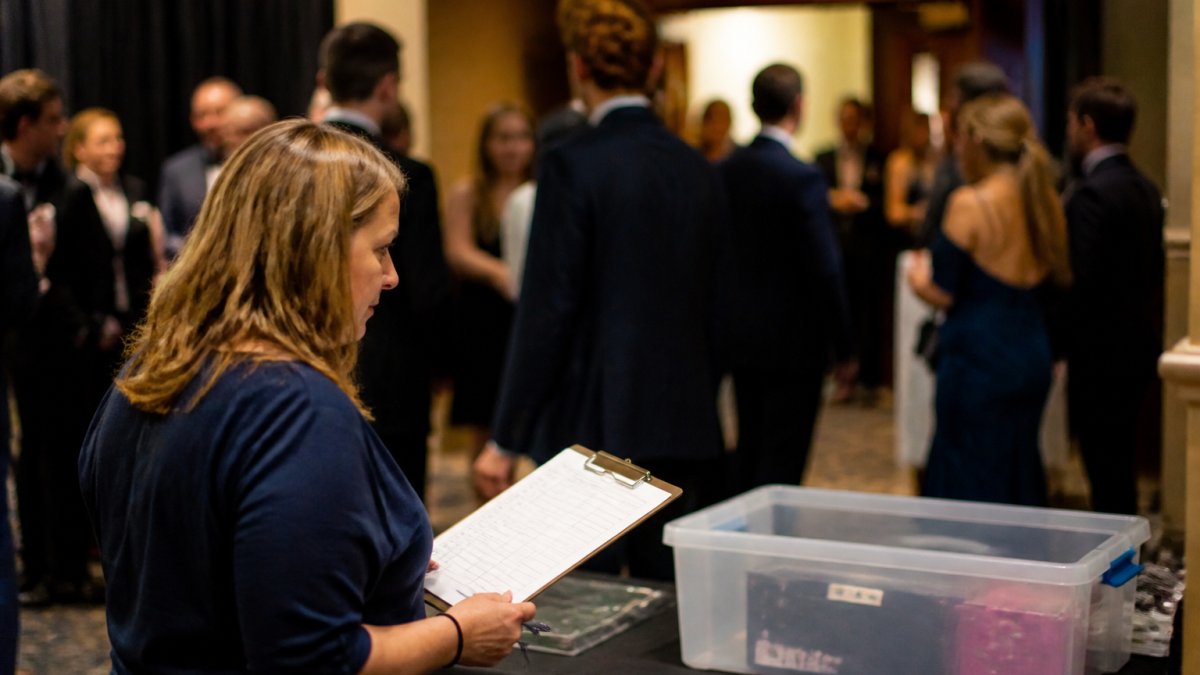
How to Manage Chaperone Logistics for School Dances
Table of Contents
- Start Planning Chaperone Logistics Early: A Step-by-Step Timeline
- How Many Chaperones for a School Dance? Staffing Ratios That Work
- Recruiting and Confirming School Dance Volunteers
- School Dance Chaperone Responsibilities: Roles and Zone Assignments
- Build a School Dance Volunteer Schedule Template
- The School Dance Chaperone Checklist: From Arrival to Dismissal
- Safety, Communication, and Incident Response on Dance Night
- Conclusion: Chaperone Logistics That Keep the Night Moving
- Frequently Asked Questions
Last Updated: October 13, 2026
Start Planning Chaperone Logistics Early: A Step-by-Step Timeline
Chaperone logistics is the work of recruiting, scheduling, and coordinating the adults who supervise students at a school dance.
Most dance committees build their timeline around the DJ, decorations, and food, handling chaperones last. That order is backwards.
Here is the timeline we would use:
- Six weeks out: Set your chaperone count and open sign-ups
- Four weeks out: Confirm each volunteer in writing and assign zones
- Two weeks out: Send the schedule, duties list, and arrival times
- One week out: Lock in backups and hold a short briefing
- Night of: Check in, deploy, and stay reachable
Advance planning gives you time to replace dropouts and lets volunteers prepare instead of guessing at the door.
The National Association of Secondary School Principals guidance on student activities notes that well-organized supervision is a core part of safe school events. Treat the timeline above as your backbone, then adjust it to your school calendar.
How Many Chaperones for a School Dance? Staffing Ratios That Work
There is no single national rule for how many chaperones a school dance needs.
What matters more than the exact ratio is coverage. A ratio tells you how many bodies you have. A coverage plan tells you where they stand.
Use this rule of thumb when you build your count:
- One chaperone per 10 to 15 students as a starting point
- Add one adult for every entrance or exit you keep open
- Add one floating chaperone who never stays in one spot
- Add one lead chaperone who handles problems and radio calls
For a dance with 300 students, that usually means 20 to 30 adults on site. It sounds like a lot until you spread them across a gym, a hallway, a cafeteria, and two restroom corridors.
Middle school dances need a heavier touch than high school proms: younger students move in packs, test boundaries, and need more redirection, so staff toward the high end of your range.
Recruiting and Confirming School Dance Volunteers
Recruitment works best when you ask specific people for a specific job. A general "we need volunteers" email gets ignored. A direct ask with a time slot attached gets answered.
Start with your known pool:
- Parents from the school community and family activities lists
- Teachers and staff who already know the students
- Student council parents and booster club members
- Local church, club, and youth group leaders
Then make the ask easy. Give a sign-up form with exact shifts, not an open-ended plea.
Confirmation is where most committees drop the ball.
Build a backup list of at least three or four people on call. Someone always cancels the day of, and without backups you are short-staffed at the worst moment.
School Dance Chaperone Responsibilities: Roles and Zone Assignments
School dance chaperone responsibilities fall into four buckets: supervision, entry control, student safety, and event flow. Assign each to a named person before the night starts.
Here is how we would split the roles:
Role | Main Duty | Zone |
|---|---|---|
Lead chaperone | Handles issues, radio calls, staff contact | Whole venue |
Door team | Check-in, ticket scan, bag check | Main entrance |
Floor chaperones | Watch the dance floor, keep students moving | Gym floor |
Hall and restroom monitors | Keep traffic moving, watch for students leaving | Hallways, restrooms |
Floaters | Fill gaps, escort students, run errands | Anywhere needed |
Zone assignments stop the "everyone is watching, so no one is watching" problem: when each adult owns a space, gaps close.
Give every chaperone a one-page sheet with their zone, duties, and who to call. Nobody reads a three-page manual at a dance.
A trained chaperone knows three things: where to stand, what to watch for, and who to tell. Drill those three points at your briefing.
Build a School Dance Volunteer Schedule Template
A school dance volunteer schedule template is a simple grid showing who works which shift, in which zone, and who they report to.
Start by deciding how many shifts your event needs.
Here is the column set we would use:
- Volunteer name
- Phone number (mobile, not a landline)
- Arrival time
- Shift start and shift end
- Assigned zone
- Role
- Reporting lead
- Backup name and phone
- Confirmation status (confirmed, pending, declined)
- Notes (accommodations, mobility limits, prior experience)
Then fill rows by shift. A common pattern for a 300-student dance with a 7:00 p.m. door and a 10:00 p.m. dismissal looks like this:
- Setup shift (5:30-7:00 p.m.): 3-4 volunteers to stage the entrance table, post signage, and walk zones before doors open
- Shift 1 (6:45-9:00 p.m.): the bulk of your floor, door, and hall coverage
- Shift 2 (8:45-10:30 p.m.): the second wave, plus dismissal and a walk-through
- Cleanup (10:00-10:45 p.m.): 3-5 volunteers, ideally the same people who did setup so they already know the layout
Notice the overlaps. The 15-minute handoff at 8:45-9:00 p.m. is where the lead chaperone briefs the incoming group on anything from the first half: a student asked to leave the floor, a restroom that needs watching, a side door getting propped open.
A few practical rules that save committees every year:
- Never schedule a volunteer for the entire event unless they specifically asked. Fatigue is where supervision gaps come from.
- Pair an experienced chaperone with a first-timer in each zone when you can.
- Keep one floater unscheduled on paper so you have a body to move when someone calls out.
- Print two copies. One goes to the lead chaperone, one stays at the door. Save a digital copy on your phone in case the paper walks off.
If your school uses a volunteer management platform, mirror the same columns there. The tool matters less than the structure. What you are really building is a coverage map disguised as a schedule.
The School Dance Chaperone Checklist: From Arrival to Dismissal
A school dance chaperone checklist turns a long night into a series of small, clear tasks. Hand one to every volunteer at check-in.
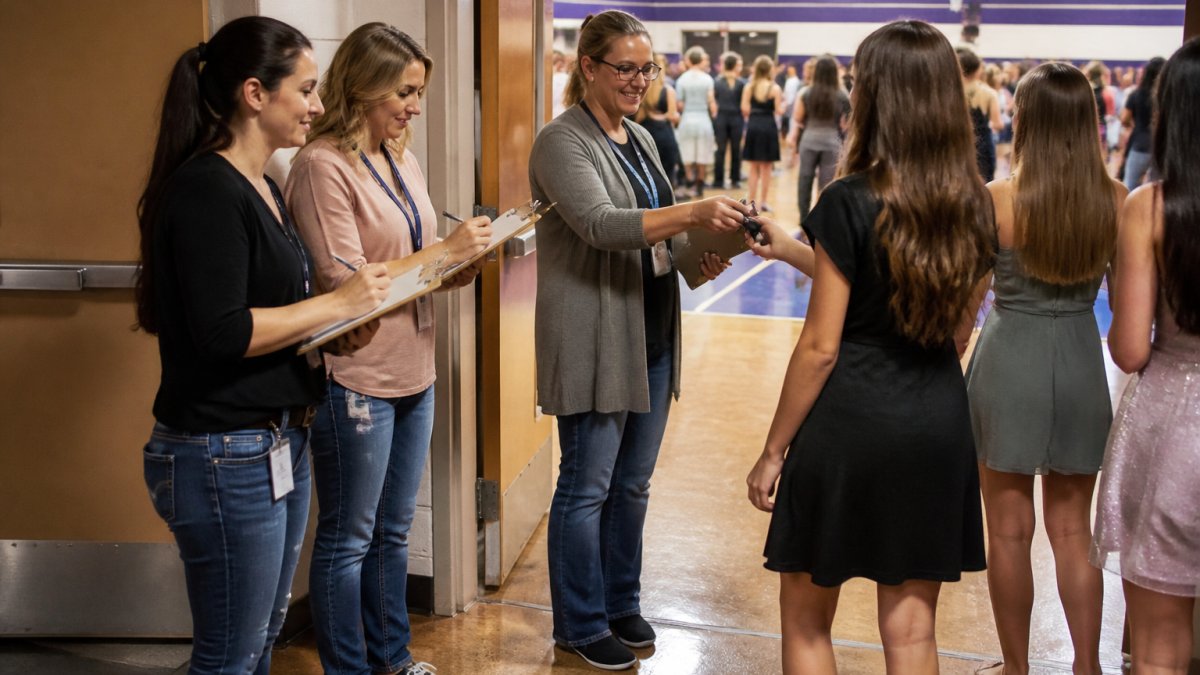
Here is the checklist we would give each chaperone:
- Arrive 30 minutes before doors open
- Sign in and pick up your zone sheet
- Confirm your radio or phone contact
- Walk your zone and note exits, restrooms, and blind spots
- Take your post before students enter
- Watch for students who leave the floor and do not return
- Keep the dance floor walkable and clear of bags
- Report any issue to the lead chaperone right away
- Stay in your zone until the lead releases you
- Help with dismissal and a quick walk-through at the end
The first 30 minutes set the tone. When students see adults at their posts, calm and alert, the room settles faster.
Safety, Communication, and Incident Response on Dance Night
The communication tree. Radios are the gold standard for the lead chaperone and door team, but most schools cannot equip every volunteer.
Escalation thresholds. Not every issue needs the same response. A simple three-tier structure keeps volunteers from overreacting or underreacting:
- Tier 1, Redirect. A student is dancing inappropriately, blocking a walkway, or refusing to leave the floor. The zone chaperone handles it with a calm verbal redirect. No escalation needed.
- Tier 2, Escort and document. A dispute, a student who will not comply, a student who appears impaired, or a student trying to leave through a side door. The zone chaperone calls the lead, the lead escorts the student to a quiet area away from the crowd, and the lead contacts the administrator on duty. Write down what happened while it is fresh.
- Tier 3, Emergency. Injury, threat, weapon, medical event, or anything that puts students in immediate danger. Call 911 first, then the administrator, then the lead. Do not wait for permission to call emergency services.
Dismissal and student release. This is when incidents cluster. Decide in advance whether students leave on their own, get picked up at a designated door, or must be signed out by a named adult. Write your school's policy on the door team's card and enforce it the same way for every student, a student who leaves alone without following sign-out policy is a liability and a safety risk. Watch the parking lot and side doors during the last 20 minutes, when students try to slip out.
Documentation. Keep a simple incident log at the door: time, student name, what happened, who responded, what action was taken, who was notified. One page, one pen, one place.
The Centers for Disease Control and Prevention guidance on school emergency operations plans supports having clear roles and communication lines for school events.
Accessibility and inclusive supervision. Some students need a quieter space, a clear path, or a staff member nearby.
Conclusion: Chaperone Logistics That Keep the Night Moving
The hard part of a school dance is not the music or decorations, it is having the right adults in the right places at the right times, which takes weeks of planning.
TheMovement315 has spent over 20 years keeping school events across Central New York moving, from Utica to Syracuse. Our customized DJ services read the room and keep students engaged, and our photo booth and karaoke add-ons give them something to remember.
Get started with TheMovement315 and lock in a pressure-free phone consultation for your next school dance.
Frequently Asked Questions
How many chaperones should a school dance have?
A common guideline is one chaperone for every 10 to 15 students, but adjust based on event size, student age, and venue layout. For a middle school dance with 200 students, plan for at least 15 to 20 chaperones. For high school events, one per 20 to 25 students often works. Always add extra coverage for hallways, restrooms, and entrance areas. Check with your school district for any specific requirements. Having a few on-call backups helps if someone cancels last minute.
What should be included in a school dance chaperone checklist?
A strong school dance chaperone checklist covers pre-event, during-event, and post-event tasks. Pre-event items include confirming your shift, reviewing student behavior policies, and picking up your badge or vest. During the event, check in at your assigned zone, monitor restrooms and hallways, and keep communication open with the lead chaperone. Post-event duties involve helping with cleanup, reporting any incidents, and returning supplies. Share the checklist digitally a few days before the dance so volunteers can review it.
How should school dance chaperones be assigned to different areas?
Assign chaperones to specific zones based on traffic flow and risk. Place at least two at the main entrance for check-in, two near the dance floor, one near the DJ or stage, and one near restroom entrances. Hallways leading to unsupervised areas need coverage too. Rotate volunteers every 30 to 45 minutes so no one gets stuck in a low-visibility spot. Give each zone captain a radio or group chat access. This zone-based approach prevents gaps and keeps everyone clear on their school dance chaperone responsibilities.
How can schools recruit parent volunteers to chaperone a dance?
Start recruitment at least four weeks before the dance. Use multiple channels: school newsletter, parent-teacher association emails, social media groups, and announcements at school events. Be specific about the time commitment and duties. Offer a simple online sign-up tool with shift options. Personal invitations from teachers or student council leaders work well. Confirm volunteers one week out and again 24 hours before. Keep two to three backups on standby. Recognizing volunteers with a small thank-you after the event encourages repeat participation.