How Interactive Entertainment Boosts Event Networking
Table of Contents
- Why Interactive Entertainment Changes How People Network
- Interactive Entertainment Ideas for Corporate Events That Get People Talking
- Corporate Event Icebreakers That Lower the Social Barrier
- Music for Corporate Team Building: Setting the Room's Energy
- Choosing a DJ for Corporate Events: What Actually Matters
- A Planning Framework: Matching Activities to Event Goals
- Measuring Networking Outcomes and Return on Investment
- Frequently Asked Questions
Last Updated: October 17, 2026
Why Interactive Entertainment Changes How People Network
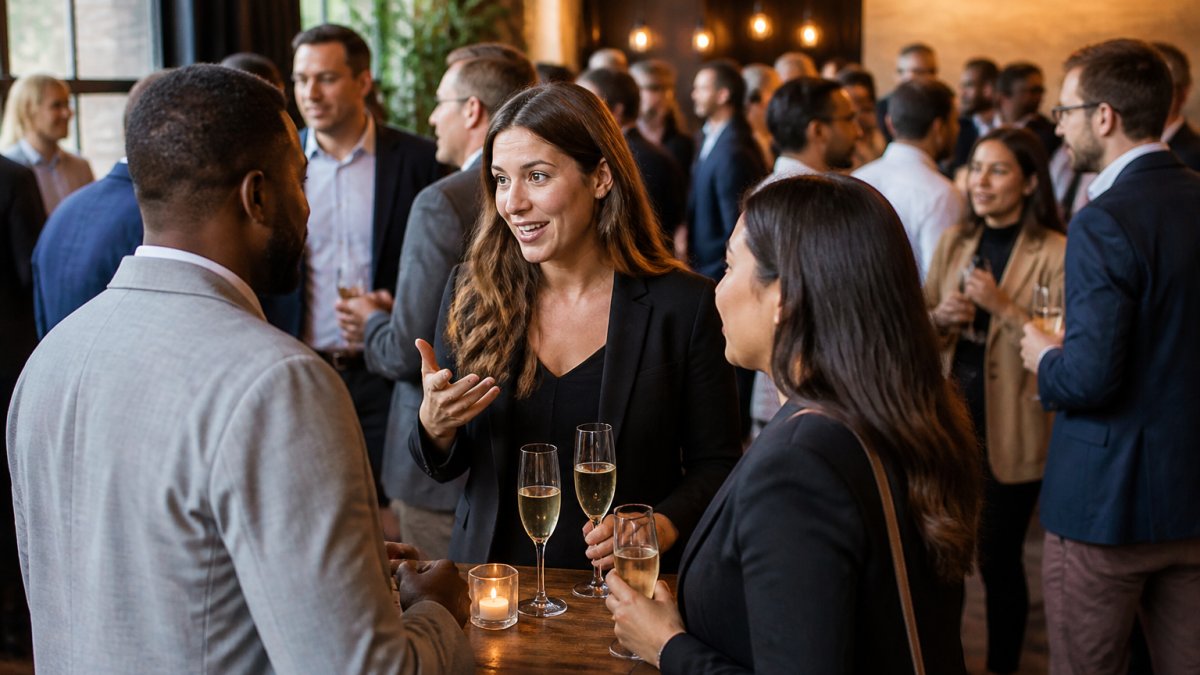
Event networking fails for one reason: people feel awkward, and event networking events rarely give them anything to do together. When a photo booth, a karaoke stage, or a team challenge is running, guests stop standing alone and start talking.
The shift is simple to explain. A networking event asks people to approach strangers and perform. That is a stressful ask. Interactive entertainment flips it.
Interactive Entertainment Ideas for Corporate Events That Get People Talking
The best interactive entertainment ideas for corporate events create shared moments, not just background noise. Pick activities that pull guests into the same space and give them a reason to interact.
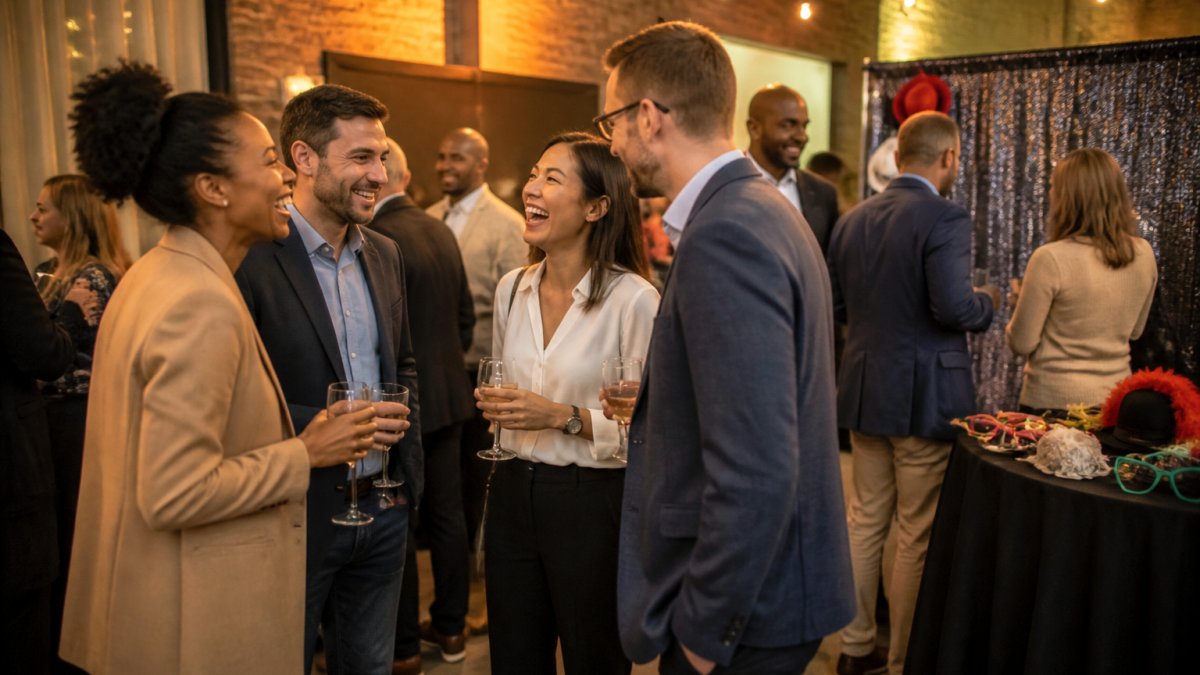
Photo Booths and Keepsake Stations
A photo booth is the easiest win at any networking event. Guests step in with coworkers or strangers, strike a pose, and leave with a printed keepsake. The line to use it becomes its own conversation zone.
What most planners miss is the follow-up value. A printed photo or a digital copy gives attendees a reason to swap contact info.
Karaoke and Group Challenges
Karaoke and group challenges push participation further. Not everyone will sing, but almost everyone will watch, cheer, and laugh. That shared audience creates a sense of belonging fast.
Friendly competition adds energy. Trivia rounds, dance-offs, or team challenges give attendees a common goal. Collaboration beats small talk every time.
Corporate Event Icebreakers That Lower the Social Barrier
Corporate event icebreakers work best when they feel like play, not an assignment. The goal is to lower the social barrier so guests relax and open up. Forced introductions usually backfire. Light, playful interaction does the opposite.
What separates an icebreaker that works from one that dies on the floor is not the activity itself, it is the design. A good icebreaker has a low entry cost (under 60 seconds to understand), a built-in reason to talk to someone new, and an exit that leaves people with a name and a topic.
Try these approaches, matched to the room:
- Photo booth with prompt props. Props that invite group shots (signs, hats, oversized frames) pull strangers together because the photo requires more than one person. The line becomes its own conversation zone.
- Music trivia in mixed teams. Seat teams of four to six with people from different departments or companies. Rounds of five to seven questions keep it short; small prizes (branded items, drink tickets) are enough to motivate without making it feel cutthroat.
- A karaoke corner with a supportive crowd. Low-pressure is the whole point. Put the stage near the bar or lounge, not in a spotlighted center, and have the DJ or MC model the first song so guests see it is safe to be imperfect.
Designing for inclusion and different comfort levels
An icebreaker that excludes people is not lowering the social barrier, it is raising a different one. Build in alternatives from the start:
- Offer a spectator role. Not everyone wants to perform. Watching, cheering, or voting is participation too, and it keeps the shared experience intact.
- Avoid activities that require physical ability, alcohol, or a specific language fluency. Provide written instructions and a host who can explain the rules in plain terms.
- Respect neurodiverse attendees. Keep noise levels manageable, avoid surprise loud moments, and give people a quiet corner to step away to. A photo booth or card prompt is often easier than a stage activity for guests who find crowds draining.
Seeding participation
The first five minutes decide whether an icebreaker takes. Do not wait for volunteers. Ask two or three outgoing guests ahead of time to start a challenge or hit the photo booth first. Once others see people having fun, participation climbs on its own. Have the DJ or MC narrate what is happening so guests who arrive late understand the activity without needing a briefing.
Music for Corporate Team Building: Setting the Room's Energy
Music for corporate team building sets the energy before anyone says a word. The right soundtrack makes a room feel welcoming. The wrong one makes it feel stiff or empty.
Here is how we think about it:
- Arrival: warm, mid-tempo tracks that invite people in
- Activities: upbeat music that lifts participation and friendly competition
- Networking lulls: familiar songs that get toes tapping and spark small talk
The music should match the crowd, not a generic playlist. A mixed-age room needs range. Read the room and adjust as the night moves.
Choosing a DJ for Corporate Events: What Actually Matters
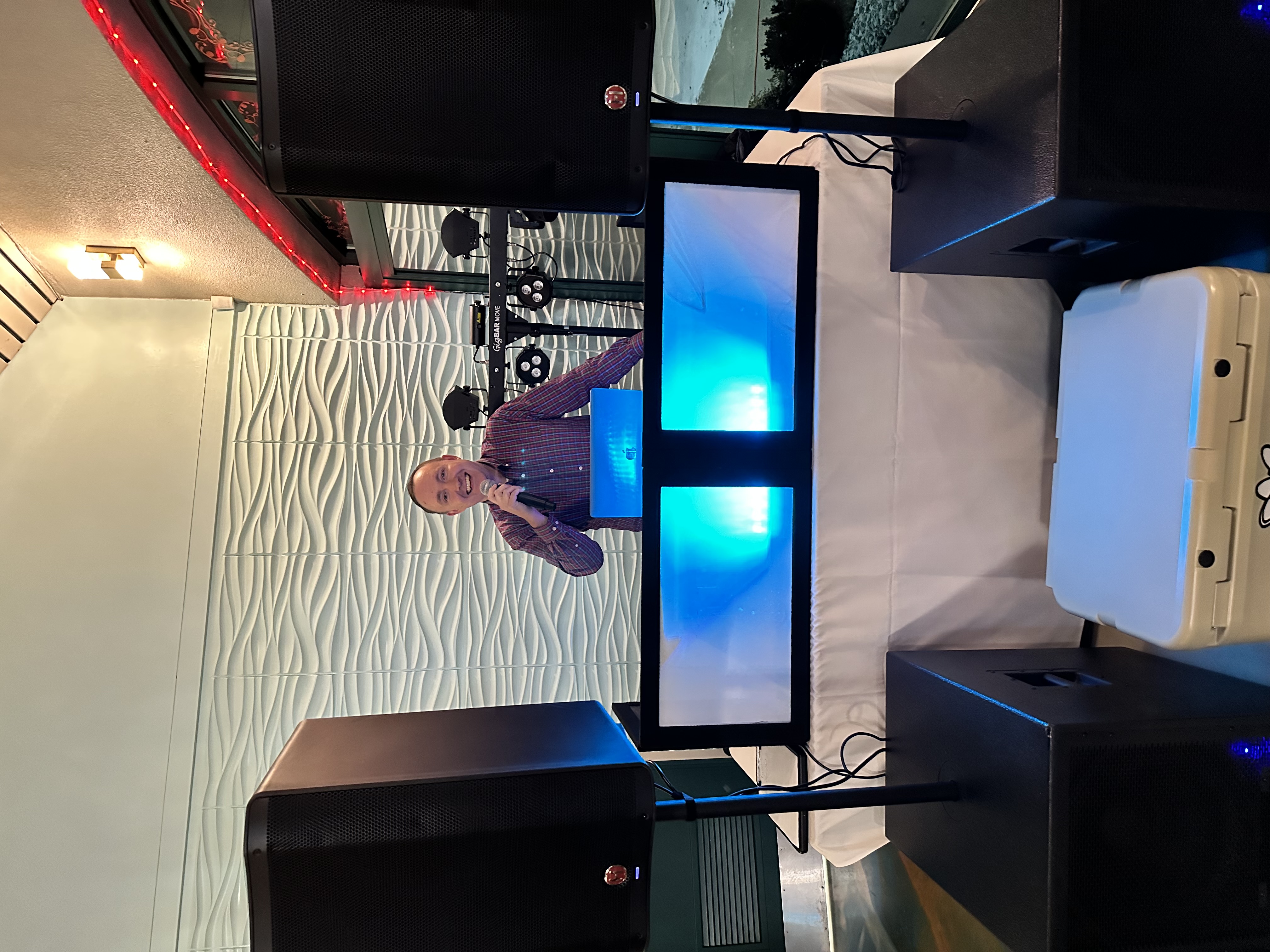
Choosing a DJ for corporate events comes down to three things: they follow your plan, they read the crowd, and they handle the room so you don't have to. A good DJ is also your MC, keeping transitions smooth and energy up. But most planners evaluate DJs on the wrong criteria, price and playlist, and miss the operational questions that actually determine whether the room networks or stands still.
What to ask before you book
A short vetting conversation separates a professional from a playlist provider. Ask these questions and listen for specifics, not reassurances:
- "How do you handle announcements and transitions?" The answer should include a plan for moving guests between activities, not just "I'll MC." A DJ who can call a transition in under 30 seconds keeps energy from dipping between activities.
- "What is your backup plan?" Power, equipment, and music redundancy matter. A professional carries backup gear and a secondary music source.
- "How do you read a mixed-age room?" Look for a process, reading the floor, adjusting tempo, taking requests within reason, rather than a fixed playlist.
The trade-offs most planners miss
- Price versus fit. The cheapest option often ignores your playlist or plays the wrong tone for a professional crowd. The most expensive is not automatically the right fit either, match the DJ to the room, not the rate card.
- Volume versus conversation. Music loud enough to energize is often too loud to network over. Plan for volume zones: louder near the activity stations, quieter near seating and conversation areas. A DJ who understands this will adjust per zone rather than running one setting all night.
- MC duties versus music. A DJ who talks too much disrupts conversation; one who never speaks leaves transitions to chance. The right balance is light narration at key moments, start of activities, prize announcements, wrap-up, and music the rest of the time.
How the DJ supports networking outcomes
The DJ is not background. They are the mechanism that keeps guests moving between shared experiences. That means:
- Cueing activities. A short announcement before trivia or karaoke tells guests what is happening and where, which is what turns spectators into participants.
- Filling lulls. When conversation dips, a familiar song or a well-timed announcement gives people something to react to together.
- Managing the close. A strong closing set and a clear last call leave guests with a positive final impression and a natural reason to exchange contact info before they leave.
We build every corporate event around a pressure-free phone consultation. That conversation lets us tailor the soundtrack and the flow to your goals. It is also where we plan MC duties, so you can enjoy the event instead of managing it.
A Planning Framework: Matching Activities to Event Goals
Match the activity to the goal before you book anything. This simple framework keeps interactive entertainment tied to event success instead of added on as an afterthought.
Event Goal | Best Activity | Why It Works |
|---|---|---|
Break the ice fast | Photo booth | Low pressure, instant shared fun |
Mix departments | Group challenges | Forces collaboration and teamwork |
Lift energy | Karaoke | Playful interaction and audience laughter |
Keep conversation flowing | Curated music | Fills lulls and sparks small talk |
Create keepsakes | Photo booth prints | Lasting memory and follow-up reason |
Timing, Transitions, and Room Layout
Timing decides whether an activity lands. Open with a low-pressure icebreaker while guests arrive. Run bigger games once the room is warm. Save karaoke for the peak of the night.
Room layout matters just as much. Place the photo booth and activity stations where people naturally gather, not tucked in a corner. Keep open space for crowds and clear paths between stations.
Measuring Networking Outcomes and Return on Investment
Measure networking outcomes with signals you can actually track, not gut feeling. Return on investment for interactive entertainment shows up in participation and follow-up, not just smiles.
Track these:
- Participation rate: how many guests joined an activity
- Follow-up conversations: new contacts made and messages sent after the event
- Attendee satisfaction: post-event survey scores on atmosphere and connections
- Keepsake shares: photos and content guests post or share
Compare these against a past event without interactive entertainment. The gap tells you what the investment delivered. For virtual and hybrid events, apply the same measures: run trivia or shared challenges online and track participation and follow-up the same way.
Frequently Asked Questions
How does interactive entertainment help people network at events?
Interactive entertainment gives attendees something to do together, which removes the pressure of starting a conversation cold. A photo booth, karaoke round, or team challenge creates a shared experience in the moment, and that experience becomes the natural opener for follow-up conversations. Instead of scanning a room for someone to approach, guests bond over the activity itself, then carry that common ground into deeper discussion about work, interests, and potential collaboration.
What entertainment activities encourage guests to talk to each other?
The strongest options are low-pressure and group-based: photo booths with props, trivia or music quizzes, karaoke, and friendly competition like team song battles. Corporate event icebreakers such as 'two truths and a lie' or table-based challenges work well too. The key is that the activity should require interaction rather than solo participation. Activities that place people in small mixed groups tend to spark the most conversation, especially when attendees do not already know each other.
How do you balance entertainment and conversation at a business event?
Alternate high-energy segments with quiet ones. Run an interactive activity for 15 to 20 minutes, then lower the music volume and let people talk for 30 to 40 minutes before the next activity. Keep background music at a level where conversation is easy, and use the DJ or MC to signal transitions clearly. This rhythm gives attendees both the shared experience that starts conversations and the calm space to actually have them.
How long should an interactive activity last at a corporate event?
Most interactive activities work best in 15 to 25 minute blocks. Shorter than that and guests barely engage; longer and the energy fades or people feel trapped. Icebreakers should run 5 to 10 minutes at the start, while photo booths and karaoke can stay open throughout as optional stations. Watch the room: if participation drops or side conversations take over, that is your cue to wrap up and transition to open networking time.
Planning a corporate event where networking has to actually work? TheMovement315 brings over 20 years of experience to corporate functions across Central New York, with customized DJ services, interactive photo booths, and karaoke that get people talking. Our pressure-free phone consultations let us tailor the entertainment to your goals, and we handle MC duties so you can focus on your guests. Get a quote from TheMovement315 and turn your next event into one people remember.