Is Live Music Worth the Cost for Corporate Events?
Table of Contents
- The Real Question Behind Live Music Cost
- Live Band vs DJ for Corporate Events: The Honest Trade-Offs
- What Corporate Event Entertainment Cost Actually Includes
- Total Cost Comparison: Live Band, Solo Performer, and DJ
- Live Music Ideas for Corporate Events That Fit Different Formats
- How to Choose a Corporate Event Band Without Getting Burned
- A Framework for Deciding if Live Music Is Worth It
- Frequently Asked Questions
Last Updated: October 17, 2026
The Real Question Behind Live Music Cost
Is live music worth the cost for corporate events? The honest answer to whether it is live music worth the cost for corporate events: it depends on what you want the room to do. A live band can turn a stiff company party into the event people talk about for months. It can also blow a big hole in your budget if the format doesn't fit.
At TheMovement315, we've spent more than two decades watching what actually moves a crowd at corporate functions across Central New York. Here's what we've learned. The question isn't "band or no band." It's whether the entertainment matches the room, the audience, and the goal of the night.
This guide breaks down real trade-offs, what costs actually include, and a simple way to decide. Keep reading and you'll have a framework you can use before you sign any contract.
Live Band vs DJ for Corporate Events: The Honest Trade-Offs
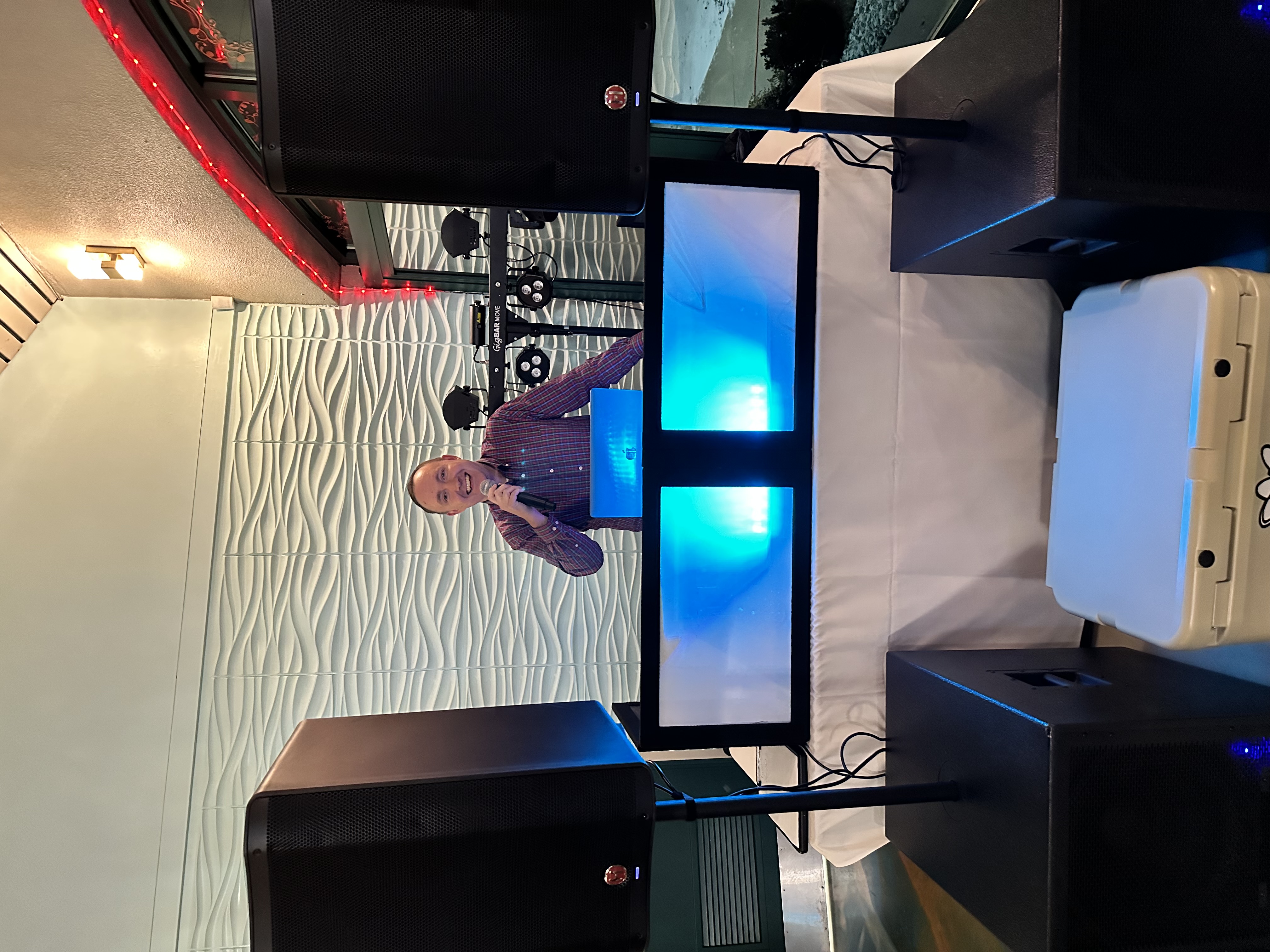
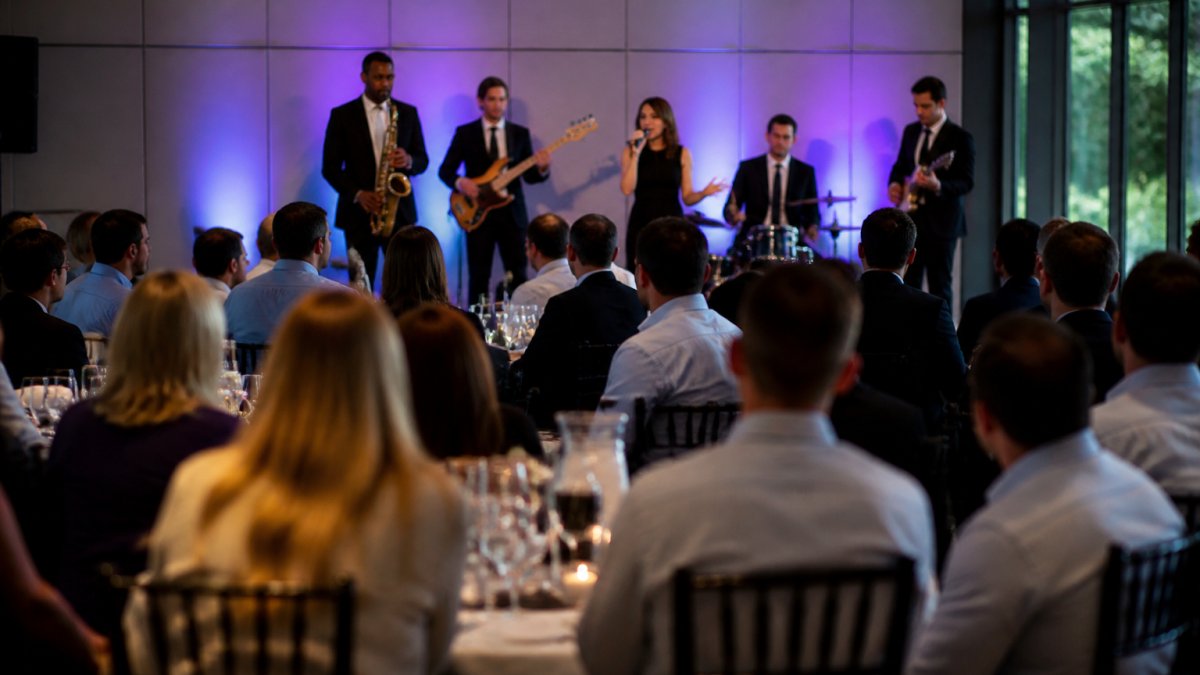
The live band vs DJ for corporate events debate usually comes down to energy versus control. A band brings spectacle and a shared "we were all there" moment. A DJ brings flexibility, lower overhead, and the ability to read the room in real time.
Here's the honest split:
Live band strengths:
- Big visual and sonic impact
- Natural crowd engagement
- A premium feel guests remember
Live band limits:
- Higher cost and more setup space
- Fixed set lengths and breaks
- Less flexibility on song requests
DJ strengths:
- Adapts to the crowd on the fly
- Handles MC duties and announcements
- Costs less for the same room
DJ limits:
- Less visual spectacle
- Energy depends heavily on the performer
The real difference comes down to your goal. If you want a show, book a band. If you want a full night of dancing with someone steering the room, a DJ usually wins.
What Corporate Event Entertainment Cost Actually Includes
Corporate event entertainment cost is rarely just the booking fee. The number on the contract is one line in a longer list. Most planners get surprised by the extras, so ask for an itemized quote up front.
A typical quote may include:
- Performance fee for the band or DJ
- Travel expenses to and from the venue
- Equipment and sound system rental
- Setup and breakdown time
- MC or hosting duties
- Lighting for the stage or dance floor
- Overtime if the event runs long
Pricing depends on band size, date, venue, and set length. We don't publish fixed rates because every event is different. Request a quote and ask for each line item in writing. That single habit prevents most billing surprises.
Total Cost Comparison: Live Band, Solo Performer, and DJ
A total cost comparison across live bands, solo performers, and DJs is the clearest way to see what you're really buying. Headline fees mislead because each option bundles a different mix of labor, equipment, setup time, and performance hours. Compare like for like, and the picture changes.
Here is what actually drives the total for each format:
Cost Driver | Live Band | Solo Performer | DJ |
|---|---|---|---|
Performers on payroll | 4-10+ musicians | 1 | 1 |
Sound system | Usually included or rented | Often self-contained | Usually included |
Setup and soundcheck | 2-4 hours, full crew | 30-60 minutes | 60-90 minutes |
Performance hours | 2-3 sets with breaks | 2-4 continuous hours | 4-6 continuous hours |
Stage and power needs | Large footprint, dedicated circuits | Minimal | Minimal to moderate |
Music variety | Fixed setlist, limited requests | Flexible within repertoire | Near-limitless |
Overtime rate | Highest (per musician) | Moderate | Lowest |
The mechanics matter more than the labels. A live band's fee reflects several musicians plus a crew, a larger PA, and a longer load-in. A solo act carries one performer and often a self-contained rig, so the total is lower and the setup footprint is smaller. A DJ typically delivers the most performance hours per dollar because one person runs continuous music with no breaks and minimal equipment.
Watch the hours, not just the fee. A band booked for two 45-minute sets delivers about 90 minutes of live music; a DJ booked for five hours delivers five hours of continuous sound. Divide the total quote by performance hours and the value gap often narrows or flips. Ask every provider for the same three numbers: total quote, performance hours, and what is excluded.
Breaks are a hidden cost. When a band takes a set break, the room needs a plan, a playlist, an MC, or a DJ, or energy drops. Factor that transition into the comparison; a cheaper band that leaves 20 minutes of dead air per break can cost more in guest experience than the fee suggests.
Live Music Ideas for Corporate Events That Fit Different Formats
Live music ideas for corporate events should match the shape of your night. A product launch and a holiday party don't need the same soundtrack.

Try these format matches:
- Cocktail hour: solo acoustic act or jazz trio
- Networking mixer: low-key DJ with background music
- Awards dinner: live band for the entrance, DJ for the after-party
- Holiday party: full band plus a DJ for late-night dancing
- Product launch: high-energy band for the reveal moment
The pattern is simple. Use live music where you want attention and a DJ where you want flow. Many successful corporate parties blend both: a band for the peak moment, a DJ to keep the floor moving before and after.
How to Choose a Corporate Event Band Without Getting Burned
How to choose a corporate event band comes down to three checks: see them perform, read the contract, and confirm the logistics. Skip any one of these and you're gambling with your budget.
Start with proof. Ask for video of a real corporate event, not just a promo reel. Then ask how they handle song requests and inappropriate material. A professional act has a clear answer.
Next, confirm the details in writing:
- Set length and number of breaks
- Arrival, setup, and soundcheck times
- Space and power requirements
- Who provides the sound system
- Cancellation and backup plan
That last point matters. Ask what happens if a performer gets sick. A good provider has a backup plan ready.
At TheMovement315, our pressure-free phone consultation exists for exactly this.
A Framework for Deciding if Live Music Is Worth It
Use a framework that ties entertainment spend to outcomes you can actually observe, not just a gut-feel score. The goal is to separate measurable results from assumptions before you sign a contract.
Start by naming the event's primary goal in one sentence. Common goals include attendee satisfaction, networking time, retention or rebooking, and post-event feedback scores. Then decide which of those the entertainment is supposed to move. If live music isn't connected to the primary goal, it's decoration, not investment.
Next, define how you'll measure it. Practical, low-cost measures include:
- Attendee satisfaction: a two-question post-event survey (overall enjoyment, entertainment rating) sent within 48 hours.
- Engagement: observed dance-floor or stage-front attendance at set intervals, recorded by a staff member.
- Networking: whether guests stay through the entertainment block or leave after dinner.
- Retention: rebooking or RSVP rates for the next event compared with prior years.
- Feedback: direct comments from leadership, sponsors, or guests about the entertainment.
Then run a simple cost-per-outcome check. Divide the total entertainment quote by the number of guests who actively engage with it. A band that costs more but keeps 80 percent of the room engaged through the peak hour may deliver a lower cost per engaged guest than a cheaper option that empties the floor. This is the comparison that survives a finance review.
Separate assumptions from evidence. Assumptions sound like "a band will make it feel premium." Evidence sounds like "last year's DJ kept the floor full until 10 p.m., and guests asked for more dancing." Write down which claims you can verify and which you're guessing. Where you're guessing, build in a cheap test: book a smaller act for one segment, survey guests, and scale up next time.
A common pattern among experienced planners is to treat the entertainment budget as a percentage of total event spend rather than a fixed line. When the event's goal is celebration or retention, a larger share is easier to justify; when the goal is information transfer, a smaller share usually fits. The percentage itself matters less than the link between spend and goal.
Frequently Asked Questions
Is live music worth the cost for a corporate event?
It depends on what the event needs to accomplish. Live music tends to earn its cost when the goal is atmosphere, attendance, or a memorable experience, such as a company anniversary, product launch, or holiday party. It is harder to justify for short networking mixers or tight-budget meetings where background sound is enough. Compare the live music cost against the outcome you want, not just against a DJ quote, and factor in setup space, power, and stage needs before you commit.
Is a live band or DJ better for a corporate event?
A DJ usually costs less, takes up less space, and can read a crowd and shift genres instantly, which suits mixed-age audiences and tight schedules. A live band delivers energy and a shared experience that people remember, and it gives you a natural focal point for the room. For a 150-person holiday party with dancing, a band plus DJ breaks can work well. For a networking mixer where conversation matters, a DJ or solo acoustic act is often the smarter pick.
How can you reduce corporate event entertainment costs?
Book further out to widen your options, choose a smaller act such as a trio or solo performer instead of a full band, and shorten the performance window rather than cutting quality. Ask what the quote includes so you are not paying separately for sound, lighting, or travel. Holding the event on an off-peak night can also help. Get itemized quotes from two or three providers and compare total cost, not just the headline booking fee.
What should you ask a corporate event band before booking them?
Ask for video of a full live performance, not a highlight reel, and confirm how many musicians are in the lineup and how long each set runs. Get the set list approach in writing, including how requests and do-not-play lists are handled. Confirm what equipment they bring, what the venue must supply, and whether travel and setup time are billed. Ask who handles MC duties and announcements, and get the cancellation and backup plan in writing.