What to Look For in a Wedding DJ: Insider Tips
Table of Contents
- Why the Right Wedding DJ Makes or Breaks the Reception
- Wedding DJ Interview Questions That Reveal Real Skill
- Equipment, Backup Gear, and Sound System Quality
- How to Keep Wedding Guests Dancing All Night
- Wedding DJ Contract Checklist: What Must Be in Writing
- Vendor Coordination and Venue Acoustics: What Most Couples Miss
- Conclusion
- Frequently Asked Questions
Last Updated: September 21, 2026
Why the Right Wedding DJ Makes or Breaks the Reception
The wedding DJ controls the emotional temperature of your reception. A great one reads the room, times every transition, and keeps your grandmother and your college friends on the same dance floor. A bad one empties it by 9 p.m.
Wedding DJ Interview Questions That Reveal Real Skill
The best wedding DJ interview questions force specific answers, not rehearsed ones. Ask about a past event that went wrong and how they fixed it. Vague answers signal a DJ who has never handled a live problem.
Questions About Music Control and the Do-Not-Play List
Ask how they build your playlist and whether they honor a do-not-play list without exception. A skilled DJ uses must-plays as anchors and fills gaps with tracks that match the room's energy, and confirms your do-not-play list in writing.
Questions About MC Duties and Event Transitions
Ask who writes the announcements and cues the toasts, first dance, and cake cutting. The DJ should own transition management, not wait for a signal. If you have to manage MC duties yourself, you hired the wrong person.
Equipment, Backup Gear, and Sound System Quality
Most guides tell you to "ask about backup gear" and stop there, useless advice, since it never explains what a real backup plan looks like or how sound needs change from a hotel ballroom to a lakeside tent. Here's the technical layer competitors skip.
The Core System: What a Professional Rig Actually Includes
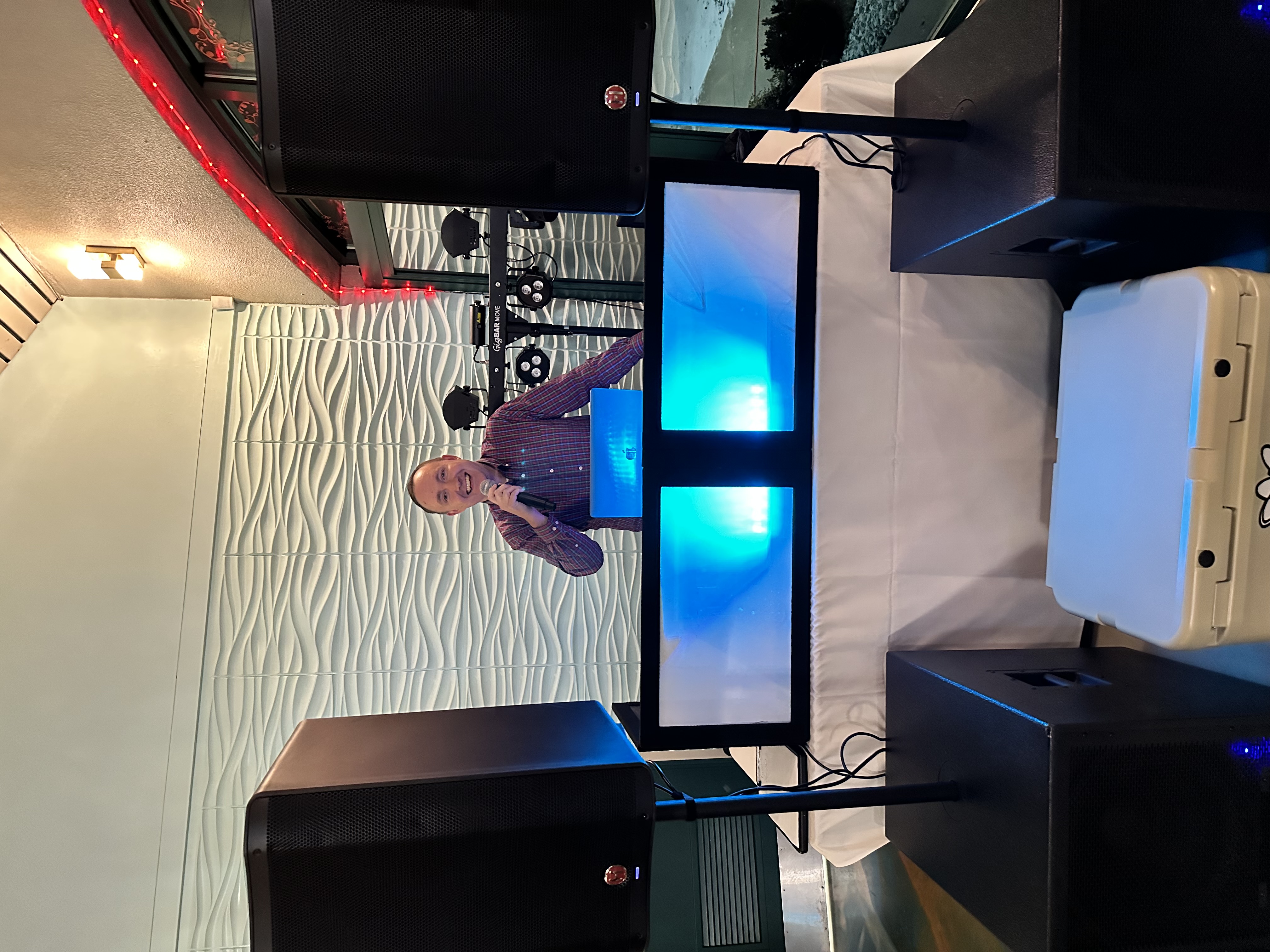
A working wedding DJ rig is not one speaker and a laptop. At minimum, expect:
- Two powered top speakers on stands, rated for the room size (a 200-guest ballroom needs more output than a 60-guest backyard dinner)
- One or two subwoofers for the low-end that carries a dance floor
- A mixer with at least two microphone channels plus separate music channels
- Two wireless handheld microphones (one for toasts, one as a live spare)
- A wired microphone as the true fallback, wireless fails, wired does not
- A laptop or controller with a second device as failover (a tablet or backup laptop with the same library loaded)
- Uplighting and dance-floor wash lights if the package includes them, on their own power circuit
Power, Cords, and the Failure Points Nobody Mentions
The most common mid-reception failure isn't a blown speaker, it's a tripped breaker. When the DJ, caterer's warming trays, and uplighting share one circuit, the music dies the moment the kitchen fires up.
Ask the DJ:
- Do you carry your own extension cords and power strips rated for the load?
- Do you request a dedicated circuit from the venue, separate from catering?
- Do you carry a backup power source (a small battery bank or generator) for outdoor events?
Venue-Specific Sound Requirements: A Checklist
Generic advice fails here because the same system behaves differently in every room. Use this checklist to force a specific answer from your DJ.
Indoor ballroom (hard floors, high ceilings, glass walls)
- Expect slap-back echo and boomy low end. Ask how they tune the system, most pros reduce subwoofer output and aim tops inward rather than at the back wall.
- Confirm they can run at a lower volume that still fills the room, since many venues cap decibels after a certain hour.
Outdoor tent or open-air space
- Sound escapes with no walls to reflect it. Expect to need more speakers placed wider, not louder.
- Ask about wind: a lightweight speaker stand in an open field is a tipping hazard. Pros use sandbags or weighted bases.
- Confirm the DJ has a plan for rain, covers, a quick teardown, or a move indoors.
Acoustically difficult spaces (churches, barns, converted industrial venues)
- Long reverb times smear speech. Ask whether the DJ uses a directional microphone technique or a separate speech-only EQ setting for toasts and vows.
- For ceremonies in these spaces, a lavalier or headset mic on the officiant often beats a handheld.
Small or intimate venues
- Oversized systems overwhelm the room. Ask if the DJ can scale down to a single top speaker and no sub.
Backup Gear: The Real Test
Ask the DJ to walk you through a specific failure scenario: "Your primary mixer dies during the first dance. What happens next?"
What to Confirm in Writing
Put the gear list in the contract, not just in conversation. It should name the specific system, the number of wireless microphones, the backup mixer, and the backup DJ, so if a different rig shows up, you have recourse.
How to Keep Wedding Guests Dancing All Night
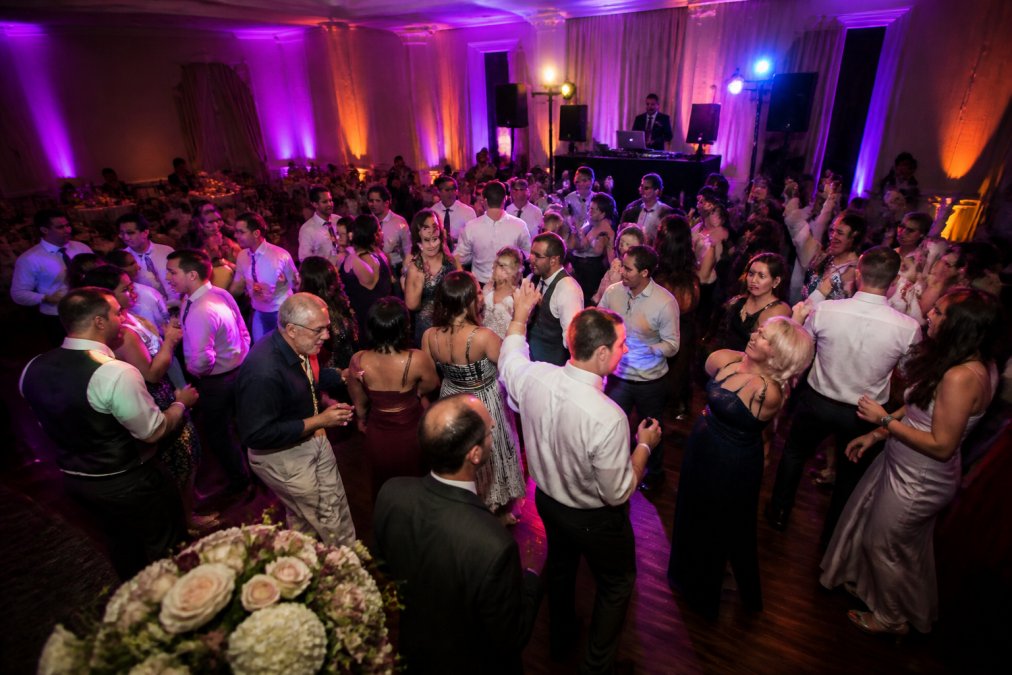
Keeping wedding guests dancing is about crowd engagement, not just song choice. The DJ reads the dance floor and adjusts in real time, swapping a slow track for a floor-filler before people drift to the bar.
Wedding DJ Contract Checklist: What Must Be in Writing
A wedding DJ contract checklist should cover every promise made during your consultation. Verbal agreements disappear when a DJ double-books or a backup fails to show.
- Full legal name and business entity
- Exact event date, start time, and end time
- Setup and breakdown window
- Total fee and deposit requirements
- Payment schedule and accepted methods
- Overtime rate per hour
- Cancellation policy and refund terms
- Backup DJ name and contact
- Equipment list and backup gear
- Playlist and do-not-play list handling
- MC duties and announcements scope
Vendor Coordination and Venue Acoustics: What Most Couples Miss
This is the section almost every "what to look for in a wedding DJ" guide skips. They tell you to ask about experience and playlists, then stop. But the DJ touches every other vendor on your timeline, photographer, caterer, planner, officiant, venue manager, and those handoffs decide whether your reception runs smoothly or stalls.
How the DJ Actually Coordinates With Your Other Vendors
Coordination isn't a phone call the week of the wedding, it's a series of specific handoffs. Here's what a professional DJ does, and what to ask yours to confirm.
With the photographer and videographer
- The DJ and photographer agree in advance on cue signals for key moments: first dance, parent dances, cake cutting, bouquet toss. A raised hand, a nod, or a radio call, not a shouted "go."
- The DJ avoids scheduling a big moment during the photographer's dinner break. Ask the DJ to review the timeline with the photographer before the event, not during it.
- For the grand entrance and first dance, the DJ and photographer agree on lighting: house lights up or down, and whether the DJ's uplighting will wash out the photographer's shots.
With the caterer and venue manager
- The DJ confirms the exact time the kitchen needs the room quiet for toasts, and the exact time dinner service ends so the dance floor can open.
- The DJ confirms the venue's noise ordinance or curfew, many venues cut amplified music at a specific hour, and a DJ who doesn't know this will get shut down mid-song.
- The DJ confirms load-in access, elevator use, and setup time so the rig is ready before guests arrive.
With the planner or coordinator
- The planner owns the master timeline; the DJ owns the music and MC cues. They should share one document, not two.
- Ask who has final say if the timeline slips, the planner or the DJ. A professional DJ defers to the planner on logistics and to you on music.
With the officiant
- For the ceremony, the DJ provides and tests the officiant's microphone, and confirms the processional and recessional song cues. This is a separate setup from the reception and should be treated as its own mini-event.
The Pre-Event Walkthrough: What It Should Cover
A professional DJ will visit the venue or request a detailed call with the venue manager beforehand. The walkthrough should answer:
- Where does the DJ set up, and is there power there?
- Where do the speakers go so the dance floor is covered but the dinner tables are not blasted?
- Where is the best microphone position for toasts?
- What is the backup plan if the primary setup location floods, overheats, or is blocked?
Venue Acoustics: The Questions That Force a Real Answer
"How do you handle acoustics?" is too vague. Ask these instead:
- "Have you worked this venue before? What did you change about your setup?"
- "How do you handle a room with a lot of glass or hard floors?"
- "What do you do if the dance floor is in a different room from the dinner tables?"
- "How do you keep the ceremony sound separate from the reception sound if they're in the same space?"
The Modern Contract Clause Most Couples Still Miss
Post-pandemic, standard cancellation and force majeure language in DJ contracts has changed. Look for:
- Force majeure language that defines what counts as an uncontrollable event, government restrictions, venue closure, illness, severe weather, and what happens to your deposit if one occurs.
- Rescheduling terms that state whether your deposit transfers to a new date, and whether there is a rescheduling fee.
- Illness clause covering what happens if the DJ personally gets sick, does the contract name a backup DJ, and does the backup honor the same rate?
- Government-restriction clause covering capacity limits or shutdown orders that change your guest count or venue.
Conclusion
The difference between a reception that empties early and one that runs until the lights come up is a DJ who plans for failure, reads the room, and owns the timeline. That's why TheMovement315 builds every event around a pressure-free phone consultation and customized playlist curation, with over two decades of experience serving Utica, Syracuse, and all of Central New York.
Frequently Asked Questions
What questions should I ask before hiring a wedding DJ?
Ask about their experience with weddings specifically, how they handle song requests and do-not-play lists, what backup equipment they bring, and whether they carry liability insurance. Request a sample playlist or video from a recent event. Confirm who will actually perform on your date, since some companies send different DJs than the one you meet. Ask how they coordinate with your photographer and caterer during the reception flow.
How do I know if a wedding DJ is professional?
Professional wedding DJs arrive early for setup, bring backup equipment, and provide a written contract with clear deposit requirements and cancellation policy. They ask detailed questions about your timeline, venue acoustics, and music preferences during the client consultation. They also coordinate with other vendors in advance. If a DJ cannot answer basic questions about their equipment or refuses to put terms in writing, treat that as a warning sign.
What should a wedding DJ contract checklist include?
Your wedding DJ contract checklist should cover the event date, start and end times, total fee, deposit amount, and payment schedule. It needs a cancellation policy, overtime rates, and a clause about backup equipment or a substitute DJ. Confirm liability insurance coverage, whether lighting packages or photo booth services are included, and who owns the rights to any recordings. Get the DJ's name and the specific package inclusions in writing before signing.
How much should I expect to pay for a quality wedding DJ?
Pricing depends on your date, location, guest count, and which services you add, such as lighting packages, photo booth rentals, or karaoke. Travel distance to your venue also affects the total. Rather than anchoring to a national average that may not reflect your market, request quotes from two or three local providers and compare what each package includes. Get a written quote that itemizes every service before you commit.