Why Professional Lighting Matters for School Dances
Table of Contents
- Why School Dance Lighting Sets the Tone Before the Music Starts
- School Dance Lighting Ideas That Get Students on the Floor
- Dance Floor Lighting Setup: Fixtures, Placement, and Control
- School Dance Safety and Lighting: Visibility, Supervision, and Compliance
- School Dance Planning Checklist: Where Lighting Fits in the Timeline
- Budgeting Professional Lighting: Rental vs. Purchase Decisions
- Coordinating Lighting with Sound, Decor, and the Venue
- Conclusion: Making the Case for Professional Lighting at Your Next School Dance
- Frequently Asked Questions
Last Updated: October 8, 2026
Why School Dance Lighting Sets the Tone Before the Music Starts
Walk into a school gym with the house lights up and you see a basketball court. Walk into that same room with the lights down and a warm wash on the floor, and you see a dance. That change happens before a single song plays. It is the clearest answer to why professional lighting matters for school dances: lighting tells students what kind of night this is.
At TheMovement315, we have spent more than 20 years running school events across Central New York, from Utica to Syracuse. We have watched a great playlist fall flat in a bright room. We have also watched a modest setup turn a plain gym into something students talk about for weeks.
Lighting is not decoration. It is stagecraft.
Here is what most planners get wrong: they treat lighting as the last line item, something to sort out the week of the dance. By then, the budget is spent and the room is locked in. Good lighting takes planning, and it takes a real setup, not a few strings of white lights stapled to a wall.
School Dance Lighting Ideas That Get Students on the Floor
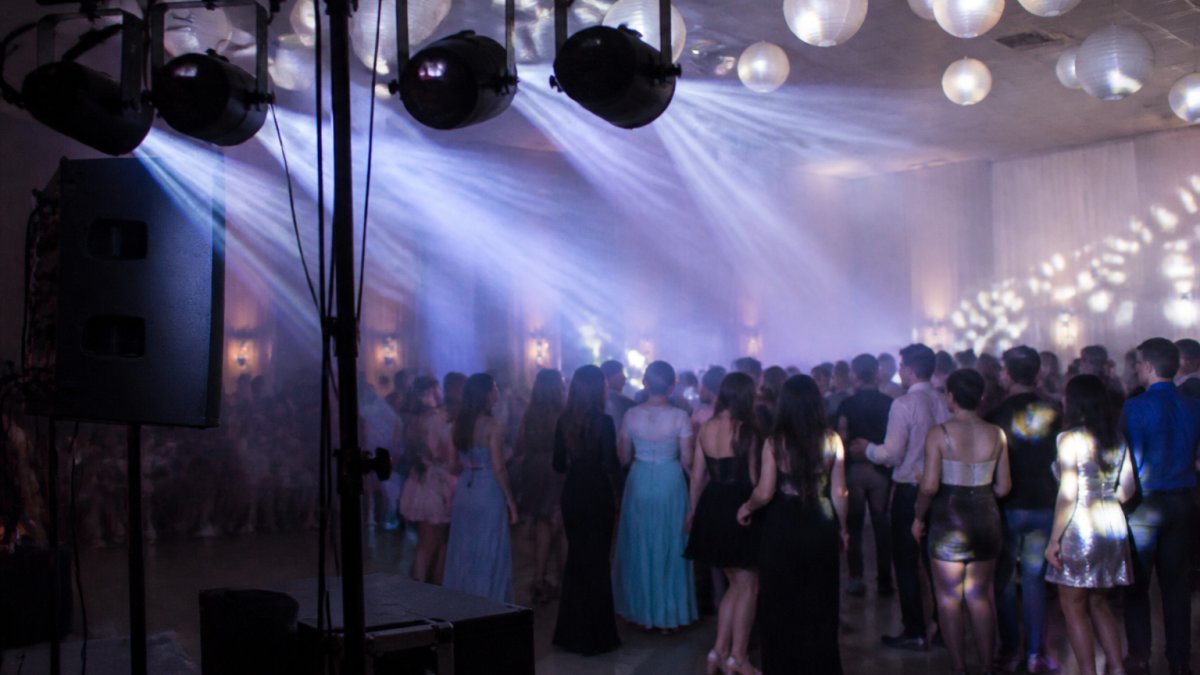
The best school dance lighting ideas share one trait: they make the dance floor the brightest thing in the room. Students move toward light. If the floor is dark and the bleachers are lit, that is where everyone stands.
Use these effects to pull a crowd in:
- Warm washes on the floor to make the space feel inviting
- Color changes that shift with the tempo of each song
- Moving beams that sweep across the crowd during fast tracks
- Spotlight moments for entrances, speeches, and special dances
- Blackouts to reset the room between big moments
The trick is contrast. A slow song needs soft, low light. A hype track needs movement and color. When the lights match the music, students feel it without knowing why.
Dance Floor Lighting Setup: Fixtures, Placement, and Control
A dance floor lighting setup comes down to three things: the right fixtures, smart placement, and one person controlling it all. Get those right and the room works. Miss one and the night feels off.
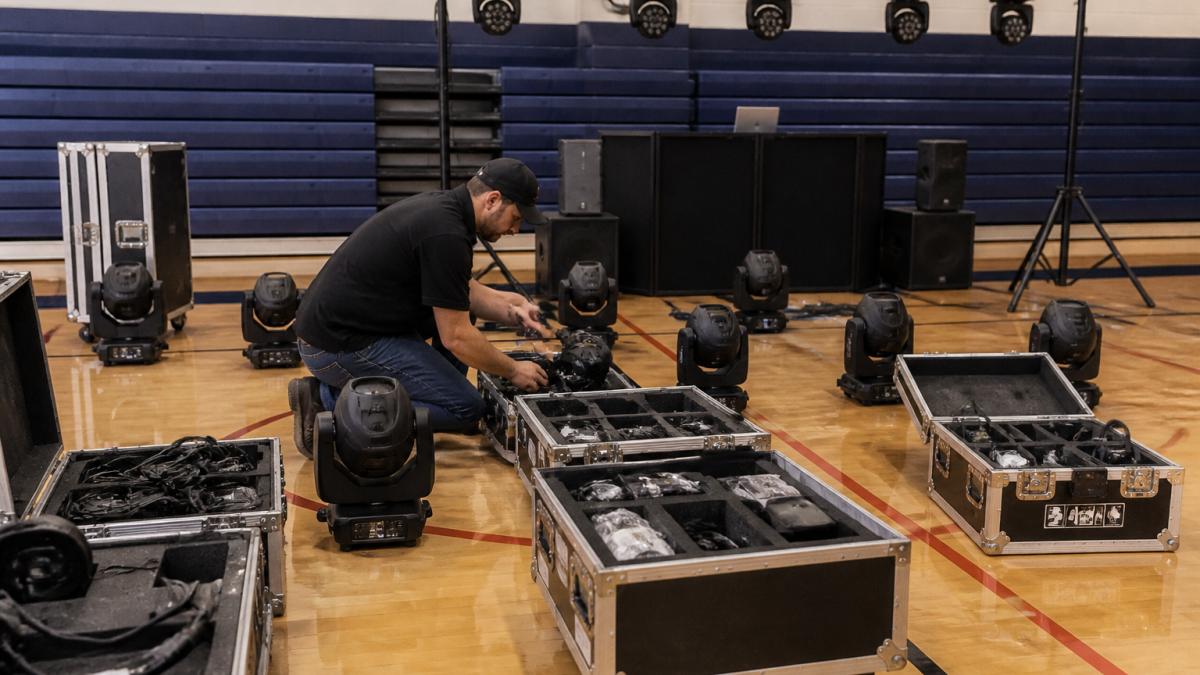
Most school dances need a small set of tools:
- Moving-head lights for beams that sweep and change direction
- LED wash lights to color the floor and walls
- Uplights to frame the room and add depth
- A simple controller so cues fire on time
Placement matters as much as the gear. Lights go up high and aim across the floor, never straight into faces. A lighting technician who knows the room can fix problems before they happen.
Control is the part people forget. Without someone running cues, you get one look all night. That gets old fast.
School Dance Safety and Lighting: Visibility, Supervision, and Compliance
School dance safety and lighting are not opposites. You can have a dramatic room and still keep every student visible. The key is to light the floor, not blind the crowd. Most ranking articles stop at that sentence. The school-specific part is what happens between the fixture and the floor.
Start with the room, not the gear. A gymnasium has a high ceiling, a slick floor, and a wall of bleachers. A cafeteria has a low drop ceiling and a tile floor that bounces light back at the crowd. Both change how you rig and aim.
Cable routing is the most common safety miss. Loose cable across a walking path is a trip hazard and a liability. Run cable along walls, tape it down with gaffer tape, and use a cable ramp anywhere it has to cross a walkway.
Strobe and flashing effects deserve their own check. Photosensitive epilepsy is the most common concern, and the standard guidance from health organizations is to avoid flash rates in the range that triggers reactions and to give a warning before any flashing effect.
Visibility for supervision is the other half. Chaperones need to see faces and hands across the floor, not just silhouettes. A common pattern is to keep a low ambient wash on the room at all times and let the dramatic looks live on the dance floor itself. That way staff can scan the crowd from the edges without stepping into the light and breaking the mood. Keep aisles, exits, and the path to the restrooms lit at all times, and never let a blackout cover the whole room.
A few rules that hold up in almost every school venue:
- Never aim beams into students' eyes, and keep moving heads above head height
- Keep walkways, exits, and the DJ booth lit at all times
- Check that chaperones can see across the room from their posts
- Avoid strobe effects unless the district policy allows them and a warning is given
- Follow your district's rules on effects, volume, and fog or haze
- Tape down or ramp every cable that crosses a walking path
Good lighting actually helps supervision. When the floor is lit and the edges are dark, staff can watch the crowd without hovering. That is the balance to aim for: a room that looks like a party and still works like a school event.
School Dance Planning Checklist: Where Lighting Fits in the Timeline
A school dance planning checklist keeps lighting from becoming a last-minute scramble. The work starts weeks before the event, not the day of.
Use this timeline:
- 8 weeks out: Set the budget and book your lighting provider
- 6 weeks out: Do a site visit and measure the space
- 4 weeks out: Lock the lighting plan and cue list
- 2 weeks out: Confirm power, setup time, and teardown
- Day before: Test all fixtures on site
- Day of: Run a full cue check before doors open
The site visit is the step people skip, and it is the one that saves the night. You need to know the ceiling height, the power supply, and where the DJ booth sits.
We handle this for schools across the region, so the planning stays simple. Our pressure-free phone consultation process starts with your venue and your vision, then builds the plan around both.
Budgeting Professional Lighting: Rental vs. Purchase Decisions
Renting lighting is the right call for most school dances. You get pro gear, a technician, and setup without a long-term commitment. Buying only makes sense if you host many events each year and have a safe place to store the equipment. The harder question is what actually drives the price, and what to ask before you sign.
Here is how the two compare:
Factor | Rental | Purchase |
|---|---|---|
Upfront cost | Lower, per event | Higher, one-time |
Maintenance | Handled by provider | Your responsibility |
Storage | Not needed | Requires secure space |
Setup and control | Usually included | You supply the crew |
Best for | One or two dances a year | Frequent, year-round events |
What moves the rental price:
- Fixture count and type. A handful of LED wash lights costs far less than a rig of moving heads. Beams and moving heads cost more because they do more.
- Control and operator. A preset look on a simple controller is cheaper than a technician running live cues all night. If you want cues on the beat, budget for the operator.
- Venue and access. A gym with a high ceiling and a loading dock is easier than a cafeteria with a low ceiling and a long carry. Setup time is labor, and labor is money.
- Date and season. Prom and homecoming weekends are the busiest nights of the year. Booking early usually costs less than booking late.
- Add-ons. Uplights, haze, and a photo booth change the quote. Ask what is included and what is extra.
Rental pricing depends on the number of fixtures, the venue, and the date, so ask for a quote rather than guessing. For a single prom or homecoming, renting wins almost every time.
Questions worth asking every vendor:
- What is included in the quote: fixtures, cable, control, setup, teardown, and an operator?
- Who handles rigging, and are they insured?
- What happens if a fixture fails mid-event?
- How early can you load in, and how late can you load out?
On the funding side, many schools cover lighting through the student council budget, ticket revenue, or a class account rather than the general fund. If the dance is a fundraiser, treat lighting as a line item next to the DJ and the decorations, not as an afterthought. A single quote that bundles music and lighting often costs less than two separate vendors, and it removes the coordination risk of two crews sharing one power source.
If you do buy, do the math honestly. Add the fixtures, the controller, the cable, the case, the storage, and the labor to set it up every time. Most schools find the break-even point is several events a year, and the storage and maintenance never really go away.
Coordinating Lighting with Sound, Decor, and the Venue
Lighting never works alone. It has to sync with sound, decor, and the room itself. When these three pull in different directions, the night feels messy.
A few coordination rules:
- Match light color to your decor theme
- Time lighting cues to the DJ's set list
- Check how the venue's ceiling and walls reflect light
- Keep the DJ booth and light control in the same spot
Flexible spaces like gyms and cafeterias need extra planning. High ceilings swallow light, and bare walls bounce it. A lighting designer adjusts for both.
This is where a single team helps. TheMovement315 runs the music and the lighting together, so cues land on the beat instead of a beat late. We also bring photo booths and karaoke to keep students busy.
Conclusion: Making the Case for Professional Lighting at Your Next School Dance
The hardest part of a school dance is holding the energy from the first song to the last. Lighting is what carries that energy when the music alone cannot. A pro setup turns a plain room into a place students want to stay.
TheMovement315 brings more than 20 years of experience, customized DJ services, and full lighting control to school events across Central New York. We plan every cue around your venue, your students, and your budget.
Get a quote from TheMovement315 and give your students a night they will not forget.
Frequently Asked Questions
Why is professional lighting important at a school dance?
Professional lighting transforms a plain gym or cafeteria into an engaging event space. It directs attention to key moments like entrances and speeches, encourages students to use the dance floor, and supports safety by keeping walkways and exits visible. Without it, the room stays flat and students may disengage. A proper setup also helps staff supervise the crowd more effectively.
What lighting is best for a school dance?
A mix of fixtures works best. Moving-head lights create dynamic effects on the dance floor, wash lights fill the room with color, and spotlights highlight entrances or performances. LED pars are energy-efficient and cool-running, which matters in gyms without strong ventilation. For safety, keep some house lights on low so staff and students can see walkways. Avoid strobes if anyone in attendance has photosensitivity.
How many lights do you need for a school dance?
The number depends on room size and ceiling height. A site visit helps determine exact placement and quantity. Renting a package sized to your venue is usually more practical than buying individual units.
How should lighting change during different parts of a school dance?
Lighting should shift with the event's energy. Start with brighter, welcoming tones as students arrive, then dim and add color as the dance floor fills. Use spotlights for announcements, crowning, or special performances. Slow songs call for softer, warmer light. Near the end, bring energy back up for the final songs, then raise house lights gradually so students can exit safely and find their rides.