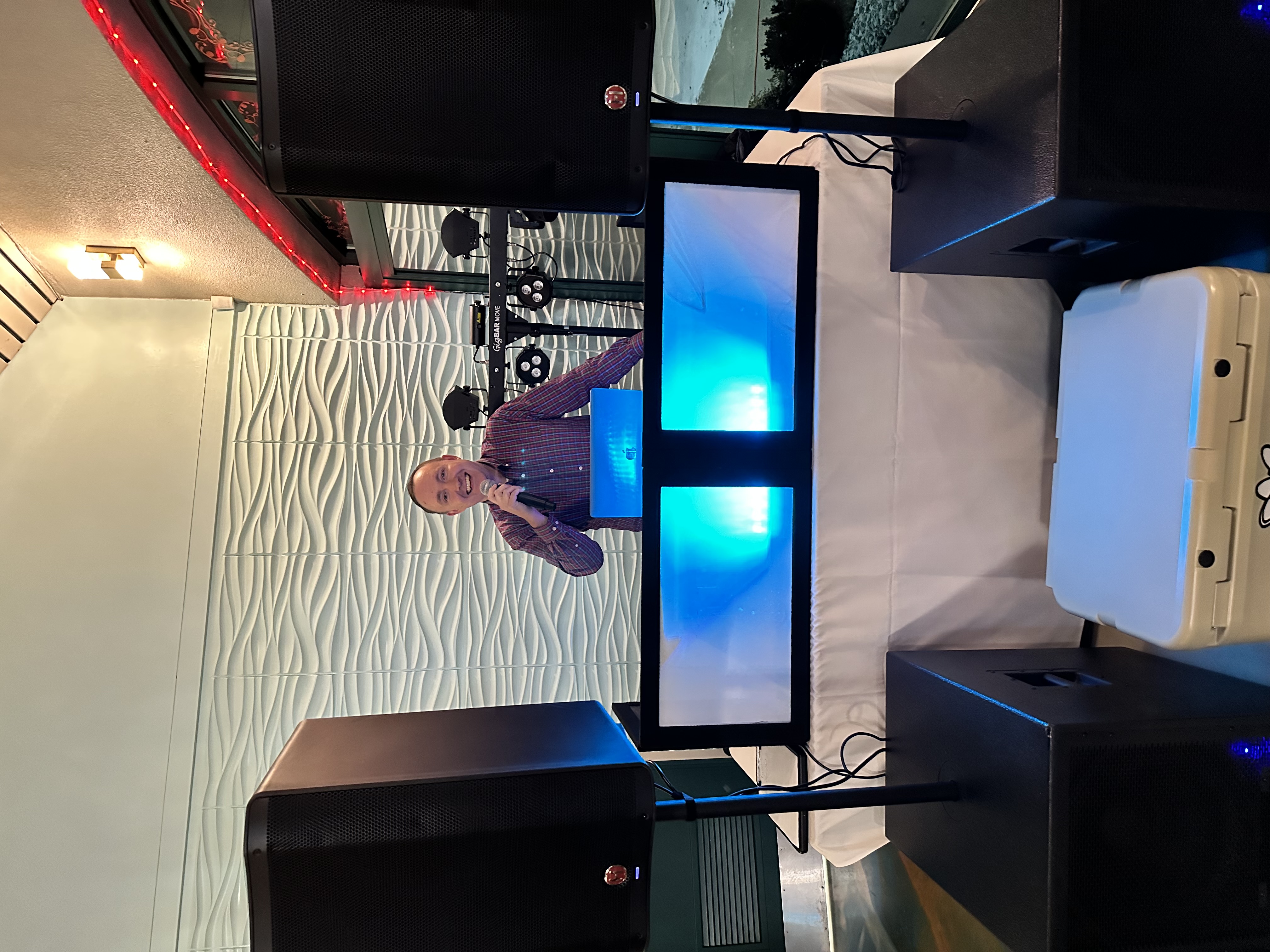
9 Factors That Influence Professional DJ Pricing
Last Updated: October 29, 2026
Quick Summary
Professional dj pricing is the total fee built from base performance time plus equipment, travel, customization, licensing, insurance, and administrative overhead. Quotes differ because experience, gear quality, setup and teardown hours, venue logistics, MC services, and hidden overhead each move the number. The cheapest bid often leaves something out.
- Most DJs price using either cost-plus pricing or value-based pricing, and the two models are not apples to apples.
- A four-hour reception typically requires several hours of setup before guests arrive and another block of teardown after.
- Music licensing obligations typically attach to the venue, not the DJ personally, but the contract determines who absorbs the cost.
- Many venues will not allow a vendor to load in without a certificate of insurance naming the venue as additional insured.
- Ask whether travel expenses are built into the quote or added later, and get the answer in writing.
Table of Contents
- Why Two DJs Quote Very Different Numbers
- Experience, Skill Level, and Reputation
- Equipment Quality, Back-Up Gear, and Maintenance
- Performance Hours, Setup, and Teardown Time
- Travel, Logistics, and Venue Capacity
- Customization, Music Curation, and MC Services
- Hidden Overhead: Licensing, Software, and Insurance
- What to Look for in a Professional DJ
- Frequently Asked Questions
Why Two DJs Quote Very Different Numbers
Professional DJ pricing comes down to a simple truth: you are not paying for someone to press play.
The pattern across professional DJ bids is consistent: the cheapest quote often leaves something out. Below are the nine variables that move the number.
DJ pricing is the total fee a professional DJ charges for an event, built from base performance time plus equipment, travel, customization, licensing, insurance, and administrative overhead.
Experience, Skill Level, and Reputation
A DJ with a long track record can charge more than a newcomer because they are selling experience, not just a playlist.
Treating all DJs as interchangeable because the gear looks similar is a mistake. If you want tips on how to avoid cheesy DJs, that guide covers what to watch for. For a deeper walkthrough, see our guide on what to look for in DJs.
Equipment Quality, Back-Up Gear, and Maintenance
Equipment quality is a major driver of a DJ quote and one clients often underestimate. A professional sound system, lighting production, and backup gear cost real money to buy and maintain.
Maintenance matters too: speakers, cables, and lighting fixtures degrade with use, and replacing them is a recurring cost. When a quote looks unusually low, ask what happens if a speaker dies mid-reception, the answer reveals whether the price reflected a real backup plan.
Performance Hours, Setup, and Teardown Time
Performance hours are only part of the clock. A four-hour reception typically requires several hours of setup before guests arrive and another block of teardown after the last song.
Ask any DJ how they handle transitions between ceremony, cocktail hour, and reception, because those handoffs change the labor involved; our guide on managing event transitions covers how professionals keep them seamless.
Travel, Logistics, and Venue Capacity
Travel expenses and venue capacity shape the quote in ways clients rarely anticipate. A DJ based in Utica traveling to Syracuse adds drive time, fuel, and the cost of hauling gear.
Logistics add up quietly: load-in access, stairs, elevator restrictions, parking, and the distance from the truck to the setup spot. A venue with a freight entrance and ground-floor ballroom is cheaper to service than a third-floor space with no elevator.
Customization, Music Curation, and MC Services
Customization is often where quotes differ most, and where the pricing model behind the quote becomes visible. Two DJs can offer the same "custom playlist" and "MC services" and arrive at very different numbers because they use different pricing models.
The two pricing models behind every DJ quote
Most professional DJs price using one of two approaches, and the model explains why similar-sounding services produce different totals.
Value-based pricing. The DJ prices on the outcome the client is buying, a packed dance floor, a seamless timeline, a reputation-safe event, rather than the cost of delivering it.
Neither model is wrong, but a cost-plus quote and a value-based quote for the same event are not apples to apples. Ask each DJ how they build their number.
What customization actually involves
A customized event is not just a longer playlist. It involves planning decisions made before the event and executed live:
- Discovery and consultation. A structured intake of must-play songs, do-not-play songs, cultural and family considerations, and the emotional arc of the event.
- Timeline building. Mapping ceremony, cocktail hour, dinner, toasts, first dances, and open dancing to specific times, with music chosen to support each segment.
- Curation and editing. Cleaning tracks, setting cue points, preparing edits and transitions, and building backup versions of key moments.
Each of these is labor. A DJ who does all five is doing meaningfully more work than one running a generic rotation.
MC services: what the add-on actually buys
MC duties are a distinct skill from DJing, and they carry their own preparation and risk. A professional MC:
- Prepares and rehearses announcements, introductions, and toasts.
- Coordinates with the planner and venue on timing and microphone handoffs.
- Manages the schedule live, including adjustments when a segment runs long.
MC services are commonly priced as an add-on or bundled into a premium package. Ask whether MC preparation is included in the base quote or added separately.
Add-ons and why they are separate line items
Add-ons such as photo booths and karaoke each carry their own equipment and setup time. They appear as separate line items because they are separate operations with their own costs. Bundling them into a single number hides the cost and makes it harder to compare quotes.
Hidden Overhead: Licensing, Software, and Insurance
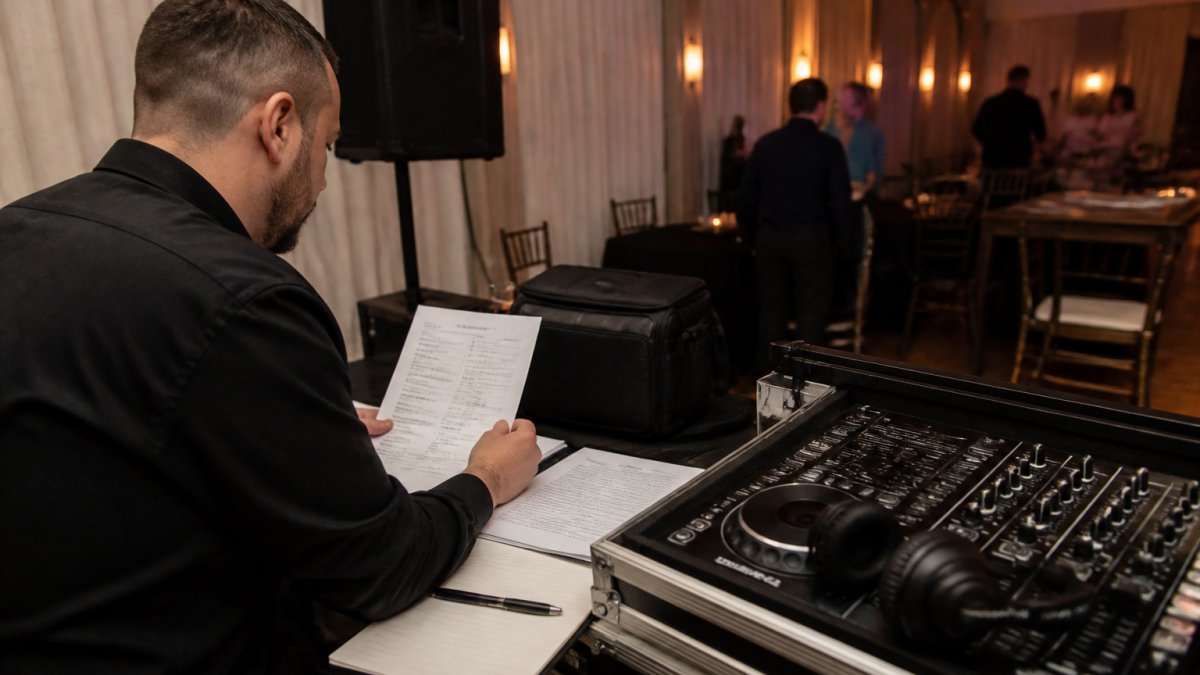
The overhead costs nobody sees on the invoice often separate a legitimate operator from a hobbyist. Most DJ pricing guides mention "insurance" and "licensing" without explaining what those costs are, who pays them, and how they land in your quote.
Music licensing: who actually pays, and when
Public performance licensing in the United States is administered by performing rights organizations such as ASCAP, BMI, and SESAC. Each represents songwriters and publishers and collects royalties when copyrighted music is performed publicly.
In practice, three scenarios show up:
- Licensed venue. Hotels, banquet halls, and dedicated event spaces usually hold blanket licenses from ASCAP, BMI, and SESAC covering performances on their premises. The DJ plays under that umbrella, and the cost is baked into the venue's facility fee, not the DJ quote.
- Unlicensed or private venue. A barn, private residence, or non-traditional space may not carry blanket coverage. A professional DJ will ask about this during booking and may require the client or venue to secure coverage, or may decline the event, a signal of a legitimate operator.
- Recorded vs. live and streaming. A DJ spinning from a licensed streaming service or personal library still triggers public performance obligations at the venue level. A DJ who claims licensing is "not their problem" without asking about the venue is either inexperienced or cutting corners.
A professional DJ may carry the administrative cost of tracking this, asking the right questions at booking and documenting the venue's coverage. That labor and any per-event licensing fee is a real cost that shows up in a serious quote.
Software and platform subscriptions
Modern DJing runs on recurring software costs that hobbyists often skip and professionals cannot. A working DJ typically pays for several categories at once:
- DJ performance software. Many DJ software platforms carry license or subscription costs, and some charge for feature tiers or hardware unlocks.
- Music pools and record pools. Many professional DJs subscribe to curated music services for clean, current, DJ-ready tracks.
- Streaming and request platforms. Services that let guests submit requests or that stream during the event carry their own subscription and, in some cases, licensing implications.
None of these are one-time purchases. They recur every month whether or not the DJ has a gig.
Insurance and the certificate of insurance
General liability insurance is commonly required by venues, and many venues will not allow a vendor to load in without a certificate of insurance (COI) naming the venue as additional insured.
Beyond general liability, professional operators may carry:
- Equipment coverage for gear damaged or stolen at an event.
- Business property and inland marine coverage for gear in transit (Understanding inland marine insurance).
- Workers' compensation if the DJ employs assistants or MCs.
- Professional liability for claims tied to advice or services.
Each policy carries a premium, a fixed cost recovered across the year's bookings. The number of events a DJ books per year affects how that cost is spread, which is one reason two quotes for the same event can differ.
Equipment depreciation and the replacement fund
Speakers, mixers, controllers, wireless microphones, and lighting fixtures wear out. Working DJs typically budget for equipment replacement on a schedule, since gear wears with regular use. That replacement fund is a real cost of doing business and one of the first things to disappear from a bargain quote.
Administrative labor
The hours a professional spends before and after the event, consultations, planning meetings, timeline building, music curation, contract review, follow-up, are unbilled on the invoice but priced into the fee. Planning and administration for an event can add substantial unbilled hours beyond setup, performance, and teardown.
| Cost Category | What It Covers | Why It Moves the Quote |
|---|---|---|
| Music licensing administration | Venue coverage verification, per-event licensing where required | Administrative labor and any per-event fee |
| General liability insurance | COI for venue, additional insured naming | Annual premium spread across bookings |
| Software subscriptions | DJ software, music pools, booking/CRM tools | Recurring monthly cost independent of gigs |
| Equipment depreciation | Wear on sound, lighting, and mic gear | Replacement fund built into the fee |
| Administrative labor | Contracts, consultations, curation, follow-up | Unbilled hours that still cost money |
What to Look for in a Professional DJ
A professional DJ quote should be itemized enough that you can see where the money goes. Ask about backup gear, insurance, travel terms, and how playlist requests are handled before you sign.
Questions to ask a DJ before booking include: What happens if equipment fails? If you are ready to move from comparing quotes to locking in a date, learn how to book a DJ for a private party.
Comparing DJ quotes can feel like decoding a foreign language, especially when the cheapest bid hides missing insurance, no backup gear, and a generic playlist.
Frequently Asked Questions
What is the going rate for DJ services?
Quotes vary widely because dj pricing reflects experience, performance hours, equipment, and travel. A hobbyist with a basic sound system may charge less, while a full-time professional with backup gear, MC services, and liability insurance generally charges more. The fairest comparison is between quotes for the same event date, length, and venue. Ask each provider what is included, from setup time to music curation, so you compare like with like rather than headline numbers.
How does the length of an event impact DJ pricing?
Most quotes cover a set performance window, and every additional hour adds to the fee. Setup and teardown usually sit outside that window but still consume the DJ's day, so a six-hour reception with a two-hour load-in costs more than the performance hours alone suggest. If your event runs long, confirm the overtime rate in writing before signing. Ask whether the quote includes ceremony or cocktail-hour coverage, since splitting one booking into multiple segments often changes the total.
Why do professional DJs charge more than hobbyists?
Professionals generally carry costs that hobbyists may not, such as liability insurance, business licensing, and software subscriptions for playlist management. That overhead can support reliability. Hobbyists may lack that redundancy and insurance, which can leave you exposed if a guest is injured or venue property is damaged.
Are travel and setup fees standard in professional DJ contracts?
Many professionals include travel within a set radius and add a mileage or logistics fee beyond it. Setup and teardown time is often built into the quote, but venues with stairs, freight elevators, or strict load-in windows can add labor charges. Before booking, ask what radius the quote covers, whether travel expenses appear as a separate line, and how early the DJ arrives. Getting those details in the contract prevents surprise charges on the final invoice.