Questions to Ask DJs About Reading a Crowd
Last Updated: November 4, 2026
Quick Summary
Crowd reading is a DJ's skill of sensing what guests want and adjusting the music to match. To judge it, ask a DJ to walk you through a real example of how they spot falling energy, handle a mixed-age room, and respond to requests.
- Ask how the DJ knows when energy is dropping and what they do about it.
- Look for specific signs like guests leaving the floor or conversations getting louder.
- Ask how they plan a room with mixed ages and how they sequence different eras.
- A vague answer such as I just play what people like is a warning sign.
- Ask how they handle requests and whether they will follow your do-not-play list.
Table of Contents
- Questions to Ask a DJ Before Booking About Crowd Reading
- How DJs Read a Crowd: Body Language, Energy, and Audio Cues
- Planning Music for Mixed-Age and Mixed-Taste Guest Lists
- Handling Song Requests Without Losing the Room
- Transition Timing and Pre-Planned Sets vs. Live Mixing
- Booking Your DJ After You Know the Right Questions to Ask
- Frequently Asked Questions
Crowd reading is the skill a DJ uses to sense what guests want and adjust the music to match.
Crowd reading matters most at events where the guest list is mixed. A wedding can include grandparents and college students. A corporate party can include executives and entry-level staff.
Here is why it counts for your event:
- It keeps the dance floor full. A DJ who notices energy dropping can change tempo or genre before guests head for the exits.
- It prevents awkward moments. Reading the room helps the DJ skip songs that might not fit the crowd or the occasion.
- It shapes the whole night. The mood set in the first hour often determines how the rest of the event feels.
Crowd reading is not guesswork. Experienced DJs follow patterns, watch body language, and adjust in real time.
Questions to Ask a DJ Before Booking About Crowd Reading
The most useful questions ask how the DJ thinks, not just what they own. Ask them to walk you through a real example. Their answer shows whether they plan carefully and adapt on the fly.
Start with these questions:
- How do you know when the energy is dropping? Listen for specific signs, such as guests leaving the floor or conversations getting louder.
- What do you do when a song clears the floor? A strong answer describes a quick change in tempo or genre, not a stubborn refusal to adjust.
- How do you handle a room with mixed ages? Look for a plan that covers both older and younger guests, not a single generic playlist.
- Do you follow a set list or read the room? The best DJs prepare a plan but treat it as a guide, not a script.
- How much do you talk to the crowd? You want someone who can work the room, but who knows when to step back.
A vague answer is a warning sign. If a DJ says "I just play what people like," ask for a specific example.
Watch out: a DJ who only talks about equipment and never about the crowd may focus more on gear than on guest experience.
How DJs Read a Crowd: Body Language, Energy, and Audio Cues
DJs read a crowd through three main channels: what they see, what they hear, and how the room feels. Understanding these helps you judge whether a DJ is paying attention.
What they watch:
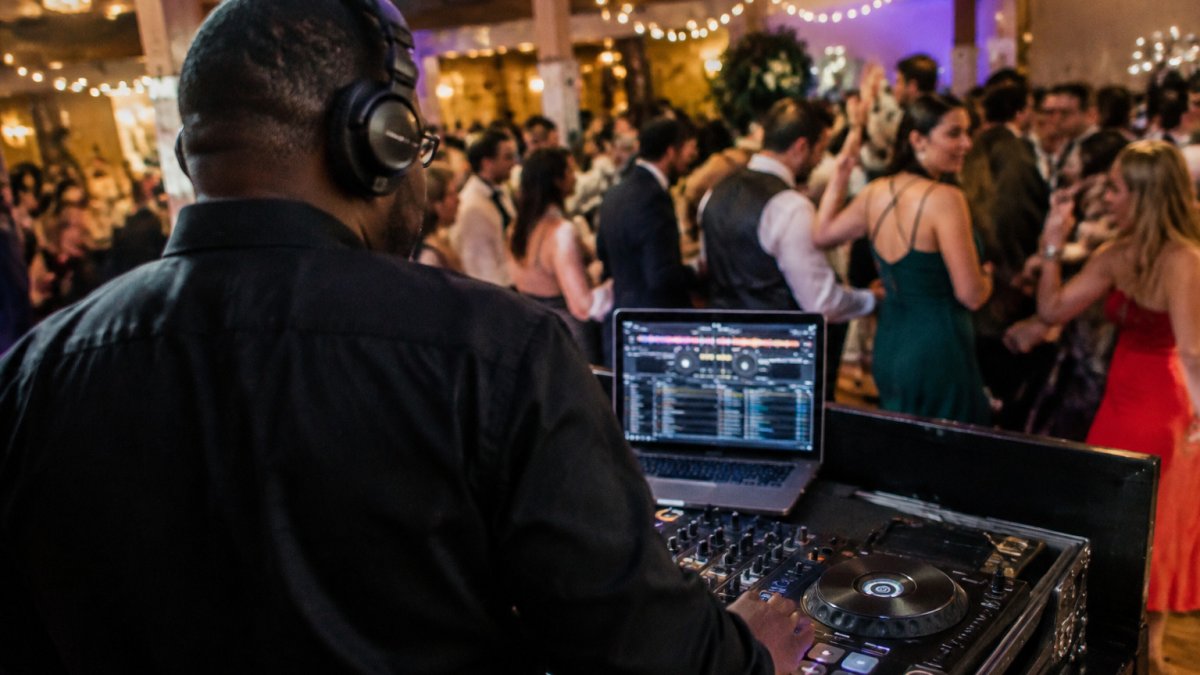
- Body language. Guests who are dancing, swaying, or moving toward the floor show engagement. Guests standing at the edges, checking phones, or heading to the bar may be losing interest.
- Movement patterns. A crowd that gathers near the booth usually wants more energy. A crowd that spreads out may want a break.
- Faces and reactions. Smiles, cheers, and sing-alongs are clear signals. Blank stares are too.
What they listen to:
- Crowd noise. Cheers and singing suggest a song is landing. Rising chatter can mean the music is too quiet or the mood is shifting.
- Requests and reactions. Guests who ask for a specific song are giving direct feedback.
How they respond:
A skilled DJ uses these signals to make small, steady changes. They might raise the tempo, shift to a familiar hit, or slow things down for a toast.
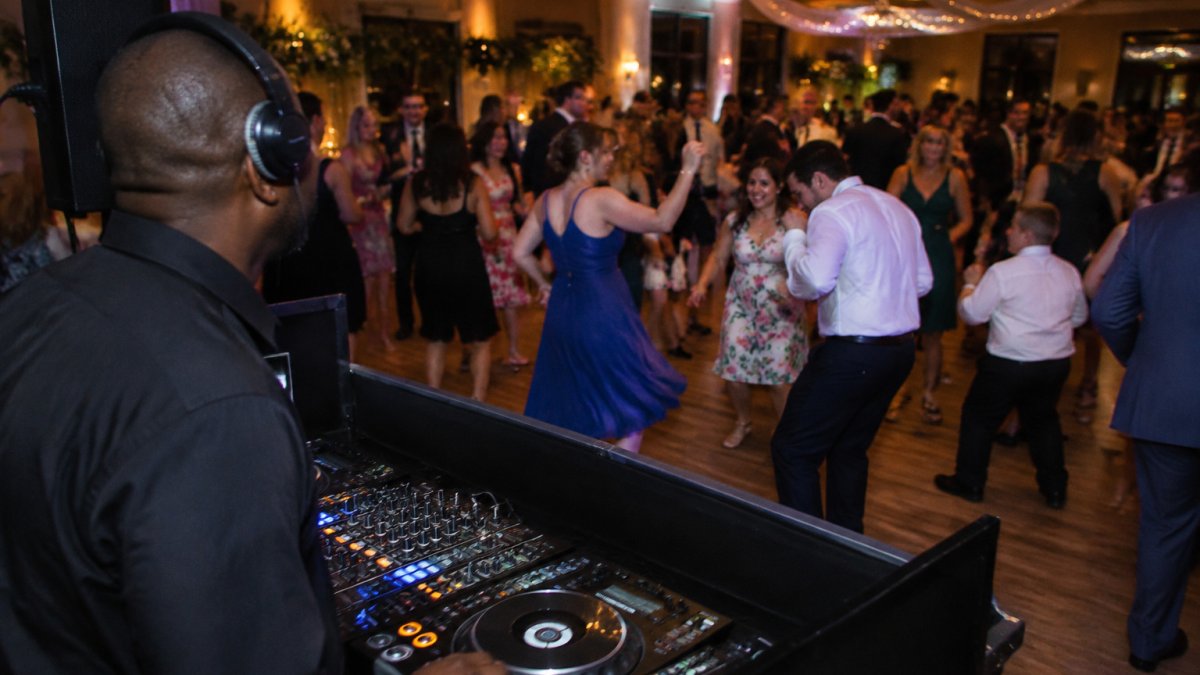
!A DJ at a mixing booth in a dim event room, glancing up to watch a mixed-age crowd of guests dancing on a wedding dance floor.
Spotting Crowd Fatigue Before the Dance Floor Empties
Crowd fatigue often shows up before guests leave. Look for a slower pace in movement, guests sitting more, and conversations that take over the music. These are early signs, and a DJ who notices them can act before the floor clears.
Ask the DJ how they track fatigue. A strong answer mentions changing the music's energy level gradually, adding a familiar song, or planning a short break in the playlist.
Planning Music for Mixed-Age and Mixed-Taste Guest Lists
A mixed guest list needs a plan, not luck. The DJ should ask you for your key songs, your must-avoid list, and any details about who will attend.
Ask these questions to test how the DJ actually plans for a divided room:
- How do you map the guest list to the timeline? A strong DJ asks for approximate age ranges and the moments each group will be present. Grandparents may leave after cake; college friends may arrive late. The plan should shift with the room, not run on a fixed clock.
- How do you sequence eras so no group feels exiled? A common approach is to alternate blocks rather than stack them, with a bridge song both groups know placed between them. Ask the DJ to describe a bridge song they use. If they cannot name one, they are guessing.
- How do you handle a multicultural guest list? This is where most guides go quiet. Ask whether the DJ has experience reading rooms with guests from different cultural backgrounds, and how they balance requests for regional or heritage music against the broader floor.
- What is your plan when the two halves of the room want opposite things? Listen for a trade-off, not a promise to please everyone. Good answers describe splitting the night into phases, using a cooldown song to reset, or moving a genre block earlier when one group is still present.
Here is a simple structure to discuss with your DJ:
- Start with a crowd-friendly opening. Choose songs most guests know, so the first hour feels welcoming to every age group.
- Mix eras on purpose. Alternate decades so older and younger guests each hear songs they recognize, and place a bridge song between blocks.
- Hold back a few surprises. Save one or two bold picks for the peak of the night, when the floor is already committed.
- Plan a cooldown. A slower stretch near the end gives guests a natural way to wind down and gives the DJ a reset point if energy spikes too early.
Ask the DJ how they handle a request for a song that might not suit the room.
Watch out: a DJ who promises to "play something for everyone" without describing a sequence, a bridge song, or a phase plan is describing a hope, not a plan.
Handling Song Requests Without Losing the Room
Song requests are useful feedback, but they can also derail a set. A DJ needs a clear policy for handling them. Ask your DJ how they manage requests, and whether they will follow your do-not-play list.
A DJ can handle requests in several ways:
- Acknowledge the request. Guests feel heard when the DJ nods or responds.
- Check the fit. Ask whether the song suits the crowd right now.
- Play it at the right moment. If it fits, the DJ can add it when the energy is ready.
- Redirect when needed. If it does not fit, a similar song in the same mood keeps the room happy.
A DJ who refuses all requests may miss valuable feedback. A DJ who plays every request may lose the flow. The right balance depends on your event, so discuss your expectations before the night begins.
Transition Timing and Pre-Planned Sets vs. Live Mixing
Transitions are the moments between songs. Smooth transitions keep the energy high. Rough ones can make the room feel flat. For a deeper walkthrough, see managing event transitions smoothly during the event.
There are two common approaches, and most strong DJs combine them:
Approach | What It Means | Best For |
|---|---|---|
Pre-planned sets | The DJ builds a playlist ahead of time and runs it in order | Ceremonies, formal dinners, events with fixed timing |
Live mixing | The DJ chooses songs in real time based on the crowd | Dance parties, mixed-age events, unpredictable crowds |
Ask which parts of your event need a plan and which parts can flex. Their answer shows how much control they keep and how much they give the crowd. Then go a level deeper with technical questions most couples and planners never ask:
- How do you decide when to cut versus crossfade? A cut works when the crowd is already committed and you want a jolt. A crossfade works when you are protecting the floor from a jarring shift. Ask the DJ to describe a moment they chose each, and why.
- Do you mix on phrase boundaries? Ask whether they count phrases or rely on visual cues.
- How do you use cue points and hot cues? These are saved markers in the DJ software that let the DJ jump to a chorus or drop instantly.
- What is your rule for abandoning a song mid-play? A strong DJ has a threshold, such as clearing the floor for a full phrase or losing a visible share of dancers, before they cut. A weak answer is "I just feel it."
- How do you review a set after the event? This is the feedback loop most DJs never mention. Ask whether they track which songs landed, which cleared the floor, and what they would change. A DJ who reviews their own sets is reading crowds across events, not just within one night.
Watch out: a DJ who describes transitions only in terms of "flow" and cannot explain beat-matching, phrasing, or cue points may be relying on pre-built playlists and hoping the room cooperates.
Booking Your DJ After You Know the Right Questions to Ask
You now have a clear set of questions to ask. Use them in your first conversation, and listen closely to the examples the DJ gives. Specific stories about past events tell you more than general promises.
Before you book, confirm how the DJ will plan your music, handle requests, and adjust during the night. A DJ who answers these questions clearly is likely to read your crowd well.
Frequently Asked Questions
What are some good questions to ask a DJ?
Ask how they build a set list when guests have different tastes, how they handle requests they have not heard before, what they do when the dance floor slows, and how they stay in contact with you before the event. Ask for a sample timeline of the night and whether they will act as MC. Strong answers name specific actions, such as reading guest reactions every few songs and shifting tempo gradually. Vague answers that promise to play whatever the crowd wants often signal a DJ who will not follow your plan or adjust mid-event.
How do DJs read a crowd and decide what to play next?
Experienced DJs watch body language, such as whether guests are moving toward the floor, standing still, or leaving to the bar. They listen for shifts in noise level and watch how the floor responds to each track, usually over several songs rather than one. They then adjust tempo, genre, or energy level to match. A good DJ will also check in with the host during the event to confirm priorities, especially when the guest list includes both older and younger attendees.
What should a DJ do if the dance floor starts to empty?
A skilled DJ first checks whether the drop is caused by the music or by the room, such as a long dinner, a speech, or a crowded bar. If the music is the cause, they shift to a familiar song or a crowd-pleaser from a previously agreed list, then build energy gradually over three to five tracks. Ask a potential DJ how they recover a room and whether they have a fallback plan for slow stretches, since the answer shows how they think on their feet.
How does a DJ balance a couple's music preferences with guest requests?
The best approach uses a clear must-play list, a do-not-play list, and a set of genres or eras the couple is comfortable with. Requests that fall within those bounds get played when the room is ready for them. Requests outside those bounds are declined politely. Ask the DJ how they handle requests in practice, and whether they will check with you before playing anything that falls in a gray area.