How to Plan a School Dance on a Budget Without Cutting Fun
Last Updated: October 29, 2026
Quick Summary
A school dance budget is a written plan that lists every cost and assigns a dollar limit to each one, starting with the money you actually have as your ceiling. Book the DJ and venue first, hold back about 10% as contingency, and track every expense in one shared spreadsheet.
- Most school dance costs fall into six buckets: venue, entertainment, decorations, refreshments, extras, and contingency.
- A sample $6,000 budget allocates 20-25% to entertainment and holds $600 as a 10% buffer.
- Every purchase over $50 commonly needs the treasurer's approval before money leaves.
- Divide fixed costs by ticket price to find break-even attendance before setting your price.
- Cut the photo booth before the DJ, since the dance floor is what students remember.
Table of Contents
- Start With a Realistic School Dance Budget
- Build a School Dance Budget Checklist Before You Book Anything
- Lock In the Date, Venue, and School Approval Early
- School Dance Fundraising Ideas That Actually Cover the Gap
- School Dance Decoration Ideas on a Budget
- Music, Entertainment, and Whether a Photo Booth for School Dance Fits Your Budget
- Safety, Supervision, and Accessibility Planning
- Book Your DJ and Photo Booth With a Pressure-Free Consultation
- Frequently Asked Questions
Start With a Realistic School Dance Budget
A school dance budget is a written plan that lists every cost for the event, from the venue to the last box of napkins, and assigns a dollar limit to each one. Without that plan, spending drifts. With it, you can defend every purchase to an administrator.
This guide walks through the full process: what to budget, how to raise the gap, where to save, and how to keep the night safe. Below, we show you exactly how to build a budget that survives contact with reality, including a sample allocation you can copy and adjust.
Start with the money you actually have. Add ticket income, activity fund transfers, and confirmed donations. That total is your ceiling, not your target.
A Sample Itemized Budget You Can Copy
Most school dance costs fall into six buckets. The percentages below are a common starting allocation for a gym-based dance with roughly 300 to 400 students attending; shift them once you have real quotes. The sample dollar column assumes a $6,000 total budget, a mid-range figure for a high school dance, so you can see how the percentages translate into line items.
Category | What It Covers | Typical Share | Sample on a $6,000 Budget |
|---|---|---|---|
Venue | Rental, custodial fees, security deposit | 15-20% | $900-$1,200 |
Entertainment | DJ, sound system, lighting | 20-25% | $1,200-$1,500 |
Decorations | Backdrop, table decor, lighting extras | 10-15% | $600-$900 |
Refreshments | Drinks, snacks, cups, ice | 15-20% | $900-$1,200 |
Extras | Photo booth, favors, prizes | 5-10% | $300-$600 |
Contingency | Unexpected costs | 10% | $600 |
Two adjustments matter more than the rest. First, if your venue is the school gym, custodial and security fees often run lower than an off-campus rental, which frees money for entertainment. Second, refreshments scale directly with attendance, a 400-student dance can double the drink and snack line compared with a 200-student dance, so lock your attendance estimate before you set that number.
A common mistake is budgeting entertainment last. Book the DJ and venue first, then see what remains for decor and extras. If the DJ quote comes in above 25% of your total, cut from decor and extras before you cut from music, the dance floor is what students remember.
Contingency and Tracking So You Do Not Overspend
Set aside roughly 10% of your total as a buffer. Custodial fees, extra tables, and last-minute supply runs are the usual culprits. On a $6,000 budget, that is $600 held back, enough to cover an unplanned security deposit or a second ice run without touching the DJ line.
Track every expense in one shared spreadsheet. Update it the same day you spend. A printed budget that nobody updates is decoration, not a plan.
A simple tracking rule: every purchase over a set threshold, $50 is common, needs the treasurer's approval before the money leaves. Below the threshold, receipts go into a shared folder the same day.
Watch out: splitting purchasing across three people with no shared tracker is how dances blow their budget. One treasurer, one sheet, one approval rule.
Build a School Dance Budget Checklist Before You Book Anything
A school dance budget checklist is a single document that lists every cost, every income source, and every approval you need before signing anything. Build it before you make a single call.
Work through it in this order:
- Confirm the total funds available
- Estimate attendance and ticket income
- List venue options and their fees
- Get quotes from DJs and entertainment
- Price decorations and refreshments
- Identify fundraising targets
- Set the contingency amount
- Get administrator sign-off on the full plan
The checklist does two jobs. It stops surprise costs, and it gives your principal one clean page to approve.
Lock In the Date, Venue, and School Approval Early
Dates disappear fast. School calendars, gym availability, and competing events all collide in the same few weeks. Pick two or three candidate dates and check them against the school calendar before anything else.
Approval usually comes before commitment. Most schools require a written proposal covering the date, venue, supervision plan, and budget. Submit it early, and ask what the approval timeline looks like.
For sequencing every step from approval to cleanup, follow a school dance planning timeline so bookings and sign-offs happen in the right order.
Venue choice drives cost more than any other decision. The gym is usually cheapest. An cafeteria or auditorium may need less decoration. Off-campus venues add rental fees, insurance questions, and transport.
School Dance Fundraising Ideas That Actually Cover the Gap
School dance fundraising ideas work best when they run weeks ahead, cost almost nothing to start, and target a specific number rather than general goodwill. The first step is to size the gap: subtract confirmed income (activity funds, donations already pledged, early ticket sales) from your total budget. That difference is what fundraising and ticket pricing must cover.
Try these, ranked roughly by effort-to-return:
- Dress-down days. Students pay a small fee to skip the uniform for a day. Low effort, predictable turnout, and easy to run monthly in the weeks before the dance.
- Bake sales and snack carts at lunch or after school. Best run by a parent or student committee with a fixed price per item so the math is simple.
- Spirit wear sales with a design voted on by students. Pre-orders avoid unsold inventory; collect payment before you place the order.
- Raffle baskets donated by local businesses. The basket costs you nothing, so nearly every ticket sold is margin.
- Ticket pre-sales at a lower early price to pull cash forward and lock in attendance.
Local businesses often sponsor dances in exchange for a banner or program mention. Ask early, and ask with a specific number in mind, "Would you cover the $400 DJ deposit?" lands better than "Can you help with the dance?"
Ticket Pricing, Break-Even Math, and Sponsorships
Price tickets to cover your fixed costs at your expected attendance, then check the math at half that attendance. If the budget only works at full capacity, it does not work.
Here is the mechanism. Take your fixed costs, venue, DJ, security, and any deposit you cannot recover, and divide by the ticket price to get break-even attendance.
Tiered pricing helps. An early-bird rate rewards planning and pulls cash forward; a standard rate protects the margin; a group or student-activity rate keeps cost from emptying the floor.
Sponsorships fill gaps that tickets cannot. A single business covering the DJ or the photo booth removes a whole line from your worry list and lets ticket revenue go toward decor and food.
School Dance Decoration Ideas on a Budget
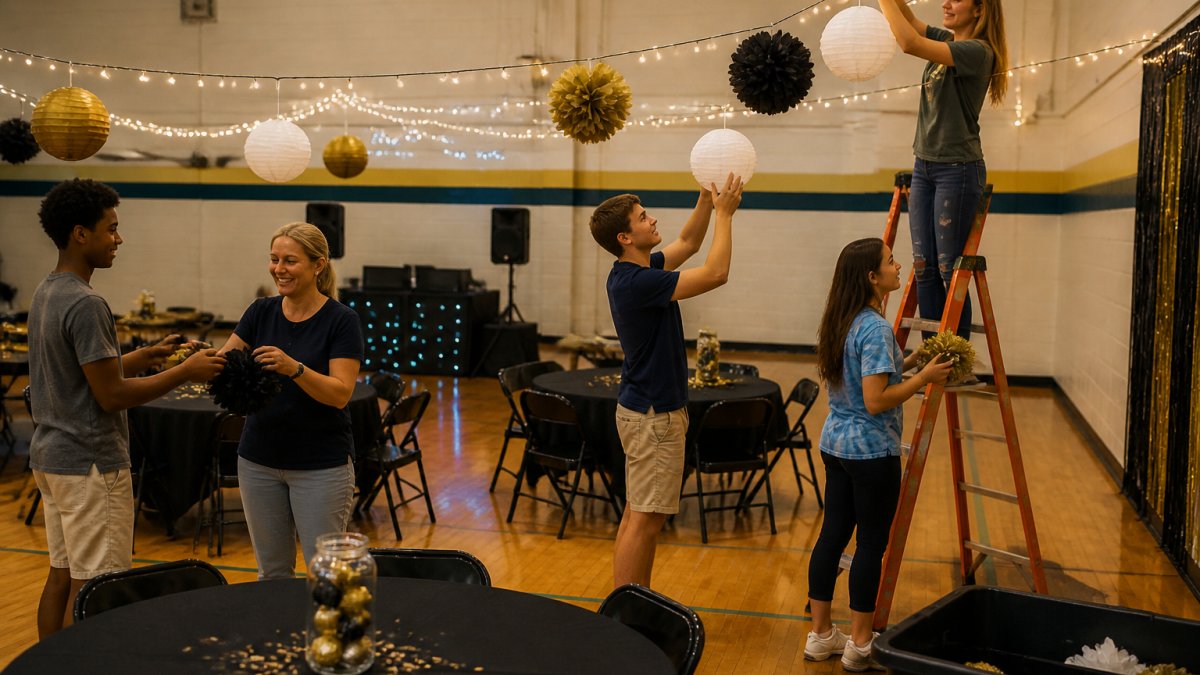
School dance decoration ideas on a budget start with lighting, not props. A dark room with a few well-placed lights looks better than a bright room with expensive balloons.
Cheap wins that read as expensive:
- Rent uplights or borrow string lights to change the whole room
- Build one photo backdrop instead of decorating every wall
- Use fabric draping to hide gym walls and equipment
- Buy paper lanterns and streamers in bulk
- Reuse decorations from previous school events
DIY decor saves money only when students do the labor. Price the materials, then honestly count the hours.
Music, Entertainment, and Whether a Photo Booth for School Dance Fits Your Budget
A photo booth is often one of the first extras cut from a school dance budget. Before deciding, check a photo booth rental price guide to see what the booth would actually cost. Decide based on what else the money covers.
A DJ who reads the crowd keeps students on the floor.
Before booking, ask three questions:
- Will the DJ follow a do-not-play list?
- Can they handle announcements and crowd interaction?
- Do they bring their own sound system and lighting?
If the budget is tight, cut the booth before you cut the DJ. If you are weighing a DIY setup against renting, read this professional photo booth vs DIY cost comparison. Music carries the whole event.
Safety, Supervision, and Accessibility Planning
Safety planning is not optional, and it is not free. Budget for chaperones, security, and a clearly written supervision plan.
Cover these basics:
- A set chaperone-to-student ratio, agreed with administration
- Check-in and check-out rules, especially for guests from other schools
- A no-reentry policy once students leave
- Accessible entry, restrooms, and seating for students with mobility needs
- A quiet space for students who need a break from the noise
- A clear plan for handling a medical or behavioral issue
Chaperones need a briefing, not just a name on a list. For practical help organizing them, see this guide to managing chaperone logistics for school dances. Give them roles, positions, and a contact chain.
Book Your DJ and Photo Booth With a Pressure-Free Consultation
The budget is only useful once it turns into bookings. Entertainment is the line item students remember, and it is the one worth getting right.
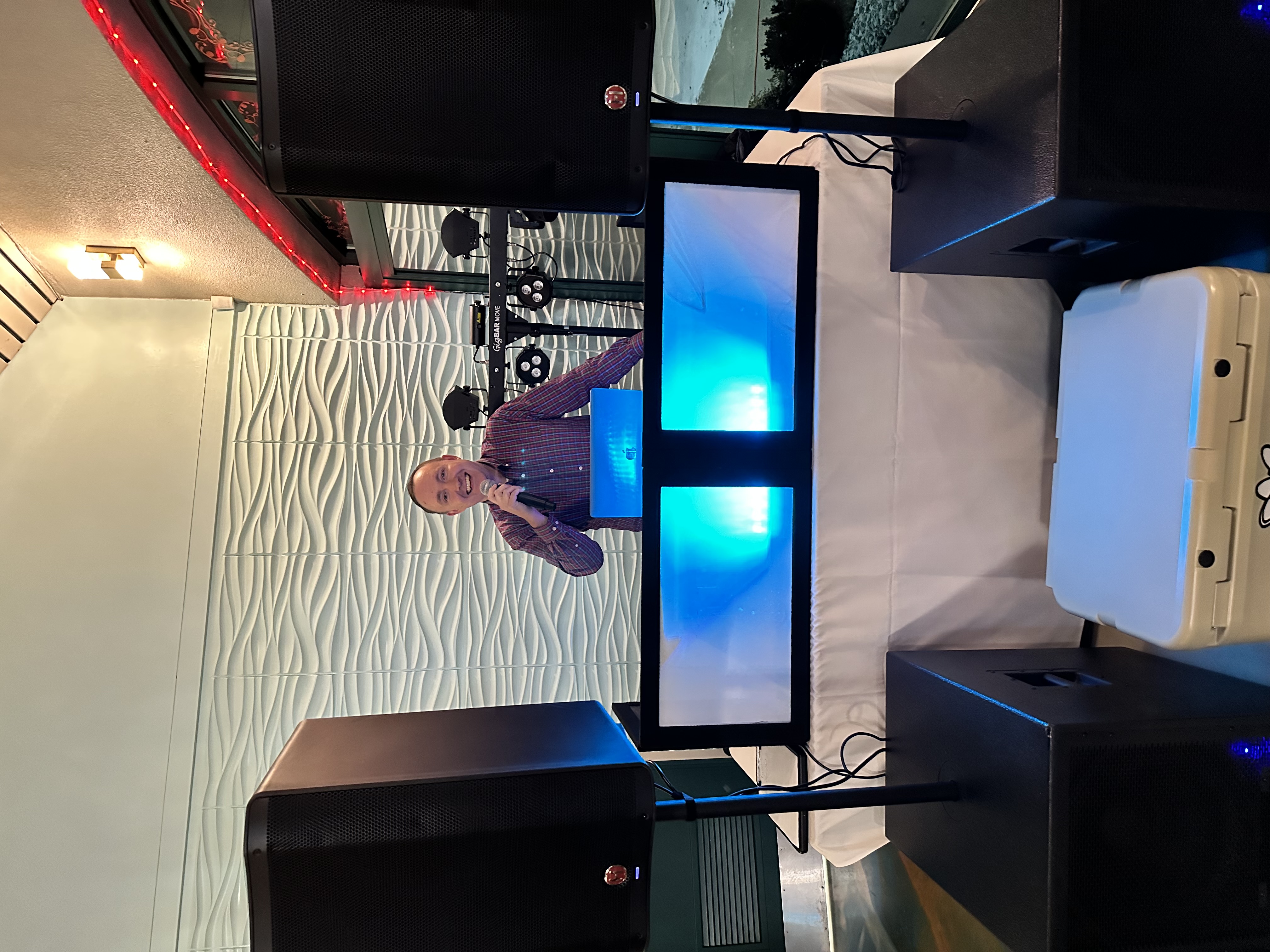
At TheMovement315, we DJ school events across Central New York, including Utica and Syracuse.
Our process starts with a pressure-free phone consultation. We also offer photo booths for personalized keepsakes and karaoke for a change of pace.
Frequently Asked Questions
What should be included in a school dance budget?
A working school dance budget should cover venue or facility fees, decorations, sound and lighting, DJ or entertainment, refreshments, security and chaperones, custodial costs, printing and promotion, and a contingency line of about 10 percent. Add ticket processing fees and any equipment rentals. Build the list before you book anything so you can see which line items are fixed and which you can trim if fundraising comes in short.
How can a school raise money for a dance?
Common school dance fundraising ideas include pre-sale ticket bundles, a spirit-week coin drive, business sponsorships from local shops, a snack or bake sale at lunch, raffle baskets donated by families, and a small fee for shout-outs or song requests. Pair two or three of these with a clear goal amount so students know what they are working toward, and start at least six to eight weeks before the event.
Is renting a photo booth for a school dance worth it?
A photo booth for school dance events gives students a supervised activity that keeps them engaged between dance sets and produces keepsakes they share afterward. Ask about props, print limits, and whether the booth attendant stays for the full event before you commit.
How do you decorate a school dance cheaply?
Focus on lighting and height instead of volume. String lights, uplighting, and fabric draping change a gym more than dozens of small props, and they can be rented or reused. Ask the art department for student-made backdrops, borrow decorations from a previous dance, and shop after-holiday sales. Set one focal point, such as a photo wall or stage backdrop, and let the rest of the room stay simple.
Planning a dance on a tight budget is a test of priorities, not luck. Get the venue, DJ, and safety plan right, and the rest can flex.
Get started with TheMovement315 and build a dance your students talk about all year. Call for a pressure-free consultation and a quote tailored to your event.