Planning Interactive Entertainment for Syracuse Retreats
Last Updated: November 16, 2026
Quick Summary
Interactive entertainment is the planned use of games, performances, and group activities that invite guests to participate rather than just watch. For Syracuse company retreats, match the format to your group size: improv and murder mystery dinners for 10-25 people, trivia and game shows for 25-75, and field days or rotating stations for 75-200+.
- Trivia works best in teams of four to six with a host keeping the pace moving.
- Two hours of programmed entertainment is usually the ceiling for small teams before a break.
- Book comedy sessions last, not as the opener, when the room is relaxed.
- Build in at least one role that does not require a microphone, like scorekeeper or judge.
- Ask providers who handles MC duties and whether that is included in the quote.
Table of Contents
- Why Interactive Entertainment Belongs on Every Syracuse Company Retreat Agenda
- Corporate Retreat Activities That Get Everyone in the Room Involved
- Interactive Team Building Activities Built for Different Group Sizes
- Company Retreat Icebreakers That Don't Make Anyone Cringe
- Music for Corporate Team Building: The Backbone of a Great Retreat
- Indoor, Outdoor, and Weather-Proof Options Across Central New York
- What to Ask Before You Book Interactive Entertainment
- Building Your Retreat Entertainment Plan with TheMovement315
- Frequently Asked Questions
Why Interactive Entertainment Belongs on Every Syracuse Company Retreat Agenda
Interactive entertainment is the planned use of games, performances, and group activities that invite guests to participate rather than just watch. A retreat built around participation tends to produce conversation, laughter, and shared memory that carries back into the office, rather than polite applause and early exits.
That matters more than most planners realize. A company retreat is one of the few settings where people from different teams, departments, and seniority levels share the same room for hours at a time.
Corporate Retreat Activities That Get Everyone in the Room Involved
The best corporate retreat activities share one trait: they lower the cost of participation. A trivia night gives people a team to hide inside; an improv workshop makes everyone equally awkward for the first five minutes. Both work because nobody has to perform alone.

Trivia Nights and Game Shows
Trivia rewards different people than the usual hierarchy does, the quiet analyst who remembers every Olympic host city suddenly matters as much as the sales lead. Run it in teams of four to six with a host who keeps the pace moving, and you have a two-hour block that needs almost no other planning. Game show formats add a physical or buzzer element for groups that want more energy.
Improv Workshops and Comedy Sessions
Improv workshops teach listening, agreement, and quick thinking, which is why facilitators often tie exercises back to communication and problem-solving at work. Comedy sessions work best as a wind-down after a long day of meetings, a common mistake is booking comedy as the opener; put it last, when the room is relaxed and ready to laugh.
Interactive Team Building Activities Built for Different Group Sizes
Group size decides format more than budget does. A 12-person leadership offsite and a 200-person all-hands need different structures, pacing, and room setups. The table below is a starting point, but the details underneath determine whether the activity lands.
Group Size | Formats That Work | Formats to Avoid |
|---|---|---|
10-25 people | Improv workshop, murder mystery dinner, creative workshop | Carnival stations, large brackets |
25-75 people | Trivia night, game show, team competition | Single long performance |
75-200+ people | Field day, carnival games, rotating stations | Workshops needing one facilitator per table |
Small Teams (10-25 People)
Small groups can handle formats that require vulnerability because everyone is visible. Run exercises in pairs before bringing anyone to the front. Murder mystery dinners need a private room with movable tables, and creative workshops need enough floor space and a surface for materials.
A common pattern is that small teams overbook structured activities and leave no downtime. Two hours of programmed entertainment is usually the ceiling before people need a break.
Mid-Size Groups (25-75 People)
This is the range where trivia and game shows outperform almost everything else. Trivia in teams keeps the room loud but manageable, and a host with a wireless mic can move between tables. Game show formats work best when the venue has a clear sightline.
Watch out: mid-size groups are where a single long performance kills the energy, because 50 people sitting and watching for 45 minutes is a different experience than 10 people in a workshop.
Large Groups (75-200+ People)
Large retreats need station-based or rotating formats so nobody stands in one line all afternoon. A field day with stations staffed by hosts can move a large group through when start times are staggered. Carnival games work the same way. The failure mode at this size is a workshop that needs one facilitator per table, because you either pay for a small army of facilitators or the room stalls.
The logistics of moving people between stations matter more than the activities themselves.
Hybrid and Remote Colleagues
If part of the team is remote, choose formats that translate to a screen. Trivia and game shows can work for remote players when run with a shared digital answer sheet. Improv and murder mystery dinners do not translate well to video because they depend on physical presence and timing. Program the in-person block around remote-friendly formats and schedule physical activities for the on-site portion of the team.
Mixed Comfort Levels and Accessibility
Every retreat has people who will not perform, will not sing, and will not stand in front of the room. Build in at least one role that does not require a microphone: scorekeeper, team captain, photo booth runner, or judge.
Accessibility needs to be planned, not assumed. Ask the venue about step-free access to the activity space, accessible restrooms, and whether the stage has a ramp. For trivia and game shows, provide written answer sheets as well as verbal questions.
If you are planning for a big group, our guide to team building activities for large companies covers formats that scale. Smaller teams planning a more intimate retreat will find creative options in our list of corporate event ideas for small teams.
Company Retreat Icebreakers That Don't Make Anyone Cringe
Company retreat icebreakers work when they give people something to do with their hands or their opinions, not something to confess. The cringe factor comes from forced vulnerability in front of coworkers.
Better options: a quick team trivia round, a photo booth challenge where teams compete for the best group shot, or a karaoke sign-up sheet that lets people volunteer rather than get volunteered.
A useful approach is to build in at least one activity where participation is optional and visible from the sidelines. It keeps the introverts in the room instead of in the hallway.
Music for Corporate Team Building: The Backbone of a Great Retreat
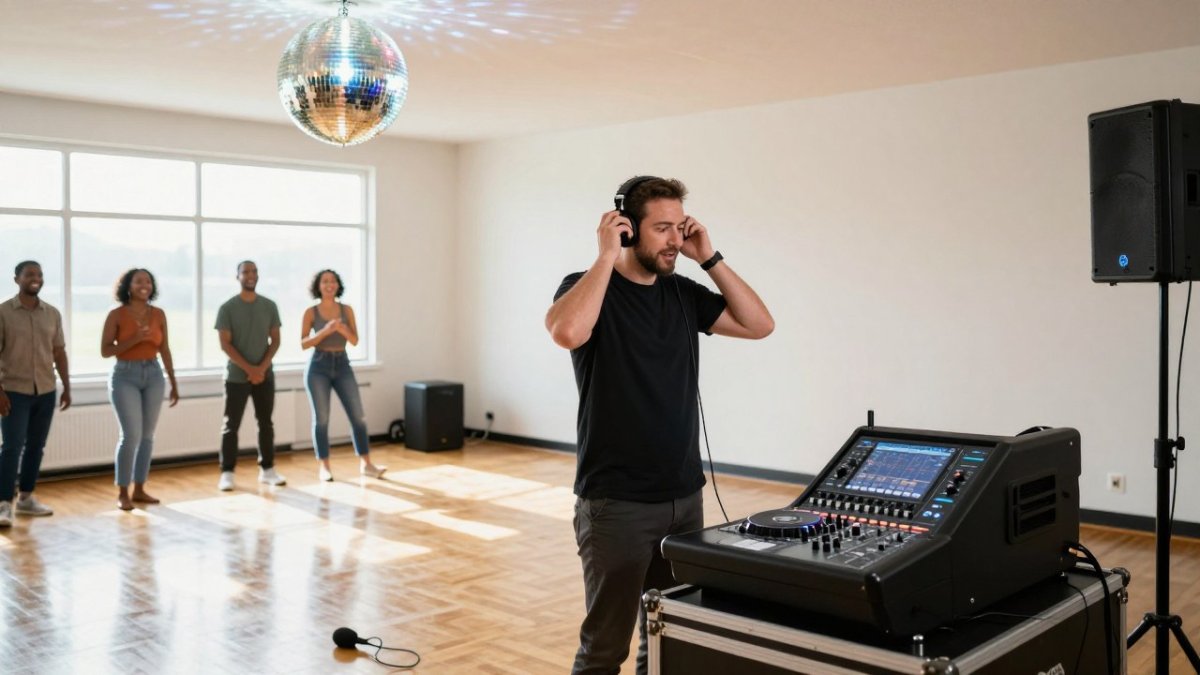
Music for corporate team building can do two jobs. It sets the energy at the start of a session, and it covers the transitions when people are moving between rooms, grabbing food, or settling in. Get it wrong and the room feels flat before anyone has spoken.
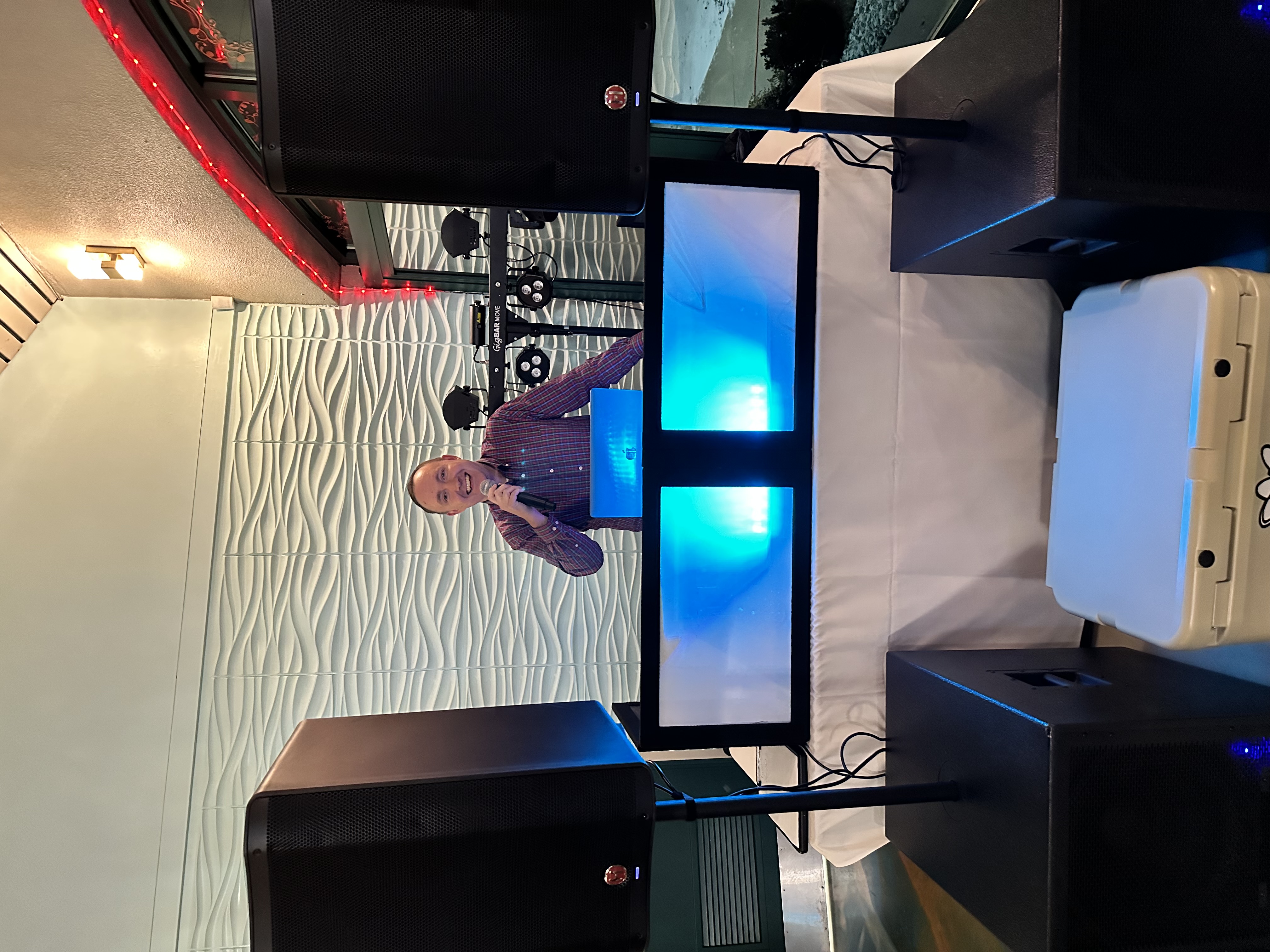
A DJ who reads a corporate crowd is different from one who plays a wedding. For a deeper look at timing, see our article on integrating music into corporate team building.
Indoor, Outdoor, and Weather-Proof Options Across Central New York
Central New York weather can change quickly. A retreat planned for an outdoor field day in the shoulder seasons benefits from a rain plan. Book a venue with both an indoor space and a covered or open-air option, then choose entertainment that works in either.
Indoor formats are the safest bet: trivia, game shows, improv, murder mystery dinners, and karaoke all run in a conference room or banquet hall. For planners comparing venues and local entertainment, our Syracuse corporate party entertainment guide covers what is available in the area and how to plan around the weather.
What to Ask Before You Book Interactive Entertainment
Ask any provider how they handle MC duties before you sign. Some planners end up running the schedule themselves when the entertainer only provides music, so ask about MC duties. You want a host who introduces activities, keeps the timeline, and handles the awkward gaps so you can enjoy the event.
Here is the checklist we would use:
- Can you share video or testimonials from past corporate events?
- Who handles MC duties and announcements, and is that included?
- How do you handle song requests and do-not-play lists?
- What is your setup time, and what space and power do you need?
- Is travel to our venue included, or is there a separate fee?
- What is the backup plan if equipment fails?
- Can you run the photo booth and DJ together without extra staff?
How Pricing Actually Works
Entertainment pricing can vary by services and add-ons selected. TheMovement315 provides current pricing and quotes through its website.
Ask for a written quote that itemizes each service, the number of staff on site, setup and breakdown time, and any overtime rate. A ballpark number over the phone is not a quote. Ask about deposit and payment terms when requesting a quote. Get the cancellation and reschedule policy in writing, because retreat dates shift more often than wedding dates.
Lead Times and Booking Windows
Booking earlier is generally wise for larger retreats and peak seasons, so contact TheMovement315 as soon as your date is set.
Contract Terms to Read Closely
Review the contract's setup and breakdown windows, power and space requirements, and cancellation terms. Confirm the provider's insurance, backup, and weather arrangements before signing.
How to Evaluate Whether It Worked
Connect each activity to a goal before you book it. If the goal is communication, an improv workshop or a trivia format with mixed teams gives you observable evidence: who talks, who listens, who leads. If the goal is morale, a photo booth and a game show produce visible energy and shareable photos.
After the event, run a short survey with three questions: what was the most engaging part of the retreat, what would you change, and did you work with someone you do not usually work with. Track attendance at optional activities as a signal of comfort level. A format that keeps 90 percent of the room in the room is working; one that empties the back third is not.
For a fuller list, see our guide to questions to ask a corporate event DJ before booking. Pricing depends on the date, the venue, and the services you need, so request a quote from TheMovement315 for current pricing.
Building Your Retreat Entertainment Plan with TheMovement315
At TheMovement315, we have supported corporate functions, school events, weddings, and private parties across Central New York for more than 20 years, including Syracuse and Utica.
If you are building a retreat agenda and want the entertainment to carry its weight, get a quote and let us map the program with you.
Planning a retreat is a series of decisions, and the entertainment decision is the one guests remember.
Frequently Asked Questions
What interactive entertainment works well for a company retreat?
Trivia nights, game shows, improv workshops, karaoke, and photo booths all work well because they let people participate at their own comfort level. The best choice depends on your group size and dynamic. A group of 30 fits a trivia night in a single room, while 150 people may need a game show format with team brackets. Pairing interactive entertainment with a DJ can keep the energy up, and you can ask providers about MC duties.
How long should entertainment last at a company retreat?
Most retreats work best with entertainment split into blocks rather than one long session. A 60- to 90-minute interactive activity after lunch, followed by music and open participation in the evening, keeps energy high without exhausting attendees. If you are booking a DJ, ask providers whether they can cover both the structured activity and the open dance or networking time.
How can music support team building at a corporate retreat?
Music sets the pace for every activity. A DJ who reads the room can pull quiet groups onto the floor, shift energy between sessions, and keep a trivia or karaoke segment moving. Music for corporate team building works best when the provider asks about your group's tastes in advance rather than defaulting to a generic playlist.
What are some low-pressure activities for a company retreat?
Photo booths, karaoke with group sign-ups, trivia teams, and carnival-style games let people join without being put on the spot. These formats give quieter attendees a role, whether that is holding the answer card or taking photos. Ask your entertainment provider about options that allow people to watch first and join later, and confirm the activity can run indoors if weather changes.